Serving the People with Dialectics – Various Authors
Return to China
Serving the People with Dialectics 1
Essays on the Study of Philosophy by Workers and Peasants
FOREIGN LANGUAGES PRESS
PEKING 1972
Printed in the People’s Republic of China
Editor’s Note
In recent years, the study of Chairman Mao’s philosophic, writings have become popular among China’s broad masses of workers and peasants in all fields of socialist construction. Many fresh successes in the struggle for production and scientific experiment have been made, and a great number of advanced people have become outstanding for their study and application of philosophy.
The six titles included in the collection tell facts that vividly describe advanced deeds by China’s workers, peasants and scientific workers, who attribute them to their application of Chairman Mao’s philosophic thinking.
Contents
- Raising Peanut Yields.
- Lessons from Failure.
- What Produces the Peanuts?
- Solving Contradictions as They Arise.
- Applying Philosophy in Transport.
- Weather Keepers for the Revolution.
- Learning from the Peasants.
- Studying the Laws of Weather Changes.
- Applying Knowledge to Practice.
- Keeping Vegetables Fresh.
- Three Tomatoes.
- Solving the Particular Contradiction of Onions.
- Storing Cabbage.
- Patients with Broken Backs Walk Again.
- Curing the “Incurable”.
- Real Knowledge Comes from Practice.
- Help the Patient to Help Himself
- Delivering Dead Letters.
Raising Peanut Yields
by Yao Shih-chang2
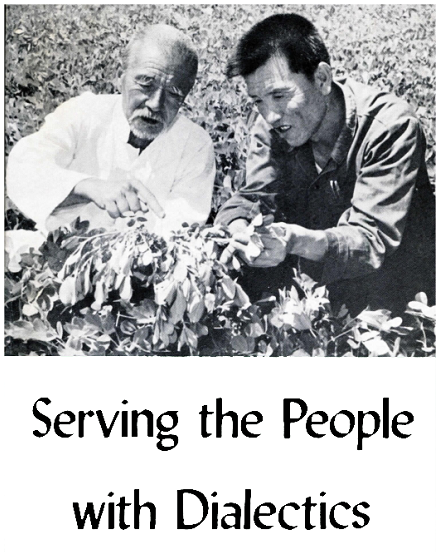
I was born into a poor peasant family forty-eight years ago. I went to school for four years when I was a child. For more than ten years I have studied Chairman Mao’s philosophic works in order to use materialist dialectics. Applied to my scientific experiments to increase peanut production, this study helped to raise our brigade’s average per-hectare yield of peanuts from around 1.5 tons before 1958 to 3.4 tons. We’ve reached as high as over 6 tons.
Lessons from Failure
Our brigade has some 320 hectares of fields, mostly hilly. We grow peanuts on about 133 hectares of this. Before 1955, our average per-hectare yield was about 1.1 tons. We raised this figure somewhat after setting up our agricultural producers’ co-operative that year, but it was still low.
In 1953 I began trying to raise our peanut yield, but I experimented without using materialist dialectics, and failed. Drought hit in the spring of 1958 just when we started sowing. The soil was dry, and it looked as though the seeds would not sprout. I had heard about a production team using deep ploughing and covering the seed with only a thin layer of soil. I persuaded our brigade to use their method, but our output dropped that year.
What was wrong? Our leaders suggested analyzing our experience and drawing lessons from it. I turned to Chairman Mao’s on Practice and On Contradiction. “Only those who are subjective, one-sided and superficial in their approach to problems,” he says, “will smugly issue orders or directives the moment they arrive on thescene, without considering the circumstances, without viewing things in their totality (their history and their present state as a whole) and without getting to the essence of things (their nature and the internal relations between one thing and another). Such people are bound to trip and fall.”
Chairman Mao’s teaching made me realize that my mistake was imitating others without considering the local conditions. That team’s land is level and fertile, so their rows of peanuts can be wide apart. The method of planting in deep furrows and covering lightly works well in their situation but not for our brigade, where the land is hilly and the soil layer thin. Our rows must be close together. When we ploughed deep, the loose soil fell into the furrow just dug and buried the seeds. It amounted to ploughing deep and covering deep, and this was what caused our output to fall.
Chairman Mao’s philosophic thinking helped me to see that my failure was due to lack of correspondence between my notion of things and the facts. I was acting blindly and passively in trying to know the objective world. I decided to apply Chairman Mao’s philosophic thinking in future scientific experiments and really increase our peanut output.
What Produces the Peanuts?
I determined to study the growth of peanuts so as to place our efforts to increase yields on a new basis. How should I go about this?
I started at the blossoming stage, with the knowledge that the peanut plant yields pods after the flowers wither.
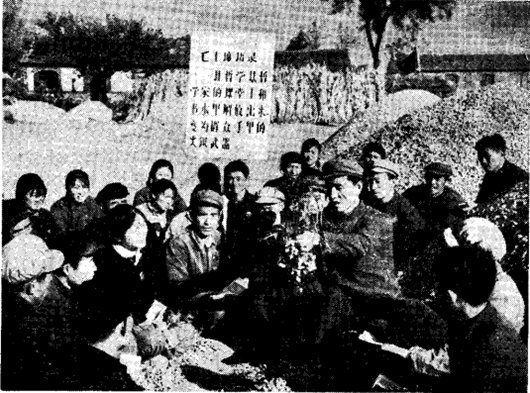
But what was the relationship between flower and nut? I selected two clusters of peanut plants for field observation, and stayed in the field for three nights during the blossoming stage. I found that peanuts blossom just before dawn. From the fourth night I went to the field before dawn each day, and labelled each flower with the date it blossomed.
I continued doing this for more than twenty days, including one rainy night when I went only after struggling with the thought that one night’s absence wouldn’t matter much. Then I remembered Chairman Mao’s teaching that the Marxist philosophy of dialectical materialism has two outstanding characteristics. One is its class nature: it is in the service of the proletariat. The other is its practicality. How could I learn the laws governing the growth of peanuts if I did not apply Chairman Mao’s philosophic ideas, first of all, to think always of serving the proletariat. I got a good soaking that night and was chilled through, but I had followed Chairman Mao’s teaching and overcome a difficulty. From that time on, I persisted in making my observations, rain or shine. In sixty nights, I attached 170 labels to my two clusters. When the peanuts were dug, I analyzed my data and learned things I never knew before about peanuts. The time between the opening of the flower and the ripening of the nut below was at least sixty-five days. I found also that the first pair of branches was responsible for most of the nuts.
This was an exciting discovery. The experiment would need testing, and in fact observation and study the second year confirmed the conclusions drawn. But coincidentally I also found that between 60 to 70 per cent of the pods were produced by the first pair of branches while 20 to 30 per cent were produced by the second. The third pair produced only a few pods, and most of those were empty. Further, the main stem of the plant bore neither flowers nor pods at all.
Having arrived at some laws governing the growth of peanuts, I continued experimenting, using these laws to increase the peanut yield. Obviously, the best should be gotten out of the first pair of branches. To favor them, shallow sowing was preferable, as it would facilitate the bearing of pods by that first pair of branches, which grew at the base of the plant. But our soil was generally dry in spring. Moreover, such large, oil-rich seeds did not sprout easily. Shallow sowing would allow the seeds to dry so that not all of them would sprout. The yield could scarcely be increased by shallow sowing. Since the principal contradiction was between all the seeds sprouting and growing well, and not doing so, the method of shallow sowing was out. We would sow the seeds as deep as was necessary to ensure sufficient moisture for sprouting and growth.
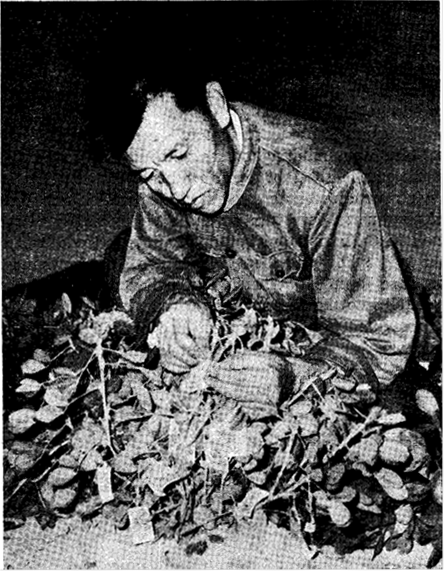
Deep ploughing having been decided on, the problem arose of the first pair of branches: buried deep in the soil they would have little chance of developing. Formerly a secondary contradiction, this problem rose to primacy. To solve it I turned to On Contradiction where Chairman Mao points out: “It [materialist dialectics] holds that external causes are the condition of change and internal causes are the basis of change, and that external causes become operative through internal causes.” I analyzed that the first pair of branches, which blossomed early with many flowers, was the internal factor in increasing output. Deep planting however, would not favor the branches’ growth, so their productive potential would not be given full play. These external conditions would tend to restrict yield. Practice provided an answer.
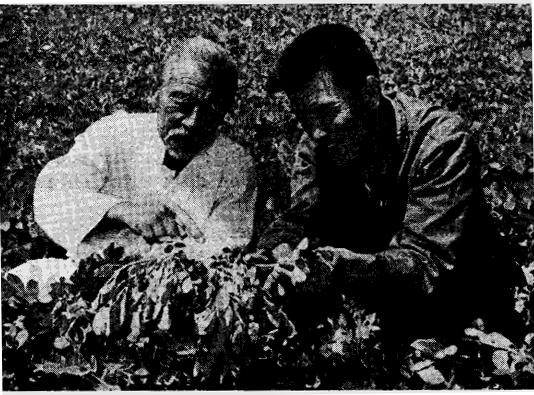
It came one day when I was helping former poor peasant Wang Tien-yuan thin out glutinous millet shoots. I asked him why we didn’t bank earth around them. He said, “If the roots are not exposed to the sun, the plants won’t produce much grain.”
It occurred to me that if the millet shoots branched off from exposed roots, why not with peanuts? We could sow deep but remove the earth around the roots so as to facilitate their branching off. I tried this with a cluster of peanut plants. The exposed main stems were white and tender, so that there was water on my hand when I rolled them between my fingers. Wouldn’t such tender roots be withered by the sun? Still, I mustn’t jump to conclusions, but see what practice said. I removed the earth around twenty-two clusters.
To my surprise, not only were the peanut plants not dry, but the main stems had turned purple and were as tough as sapling branches. I had found a solution to the contradiction between deep planting and developing the first pair of branches. When I discussed this method with our brigade cadres, they decided to set aside four small plots for experiment. That autumn we harvested 25 per cent more peanuts from those plots than from the controls.
Solving Contradictions as They Arise
Applying this method throughout the brigade, we increased our output of peanuts on all 133 hectares quite substantially. This meant a lot to our brigade, and to us. Chairman Mao’s philosophic thinking had given us the key of materialist dialectics to solve our problems in growing peanuts. I went on experimenting in the spirit of Chairman Mao’s teaching: “Man has constantly to sum up experience and go on discovering, inventing, creating and advancing.”
I found that while each flower stalk (calyx tube) of the first pair of branches had six or seven flowers, it bore only one or two pods beneath, showing a contradiction between the main stem and the branches. The first and second pairs of branches need more nourishment for growth, blossoming and bearing pods, but the main stem drew it away.
I referred again to the principle of transformation of contradictions as explained in Chairman Mao’s on Contradiction. I tried cutting off the top of the main stem to check its overgrowth after the second pair of branches had grown. The result was about as expected: the first pair of branches blossomed seven days earlier, and each cluster bore seven more pods. The following year, on an experimental plot, using the same irrigation and fertilizer, the yield was roughly 8 per cent more.
Practice in those two years led me to the conclusion that in farm work, as in all other, we must constantly resolve contradictions. Scientific experiments create the conditions to transform contradictions in a direction favorable to the revolutionary creations of mankind. We concluded that since things are continuously developing, and since contradictions are bound to arise from time to time, so scientific experiments must constantly be made.
Applying Philosophy in Transport
by the crew of a 150-ton trailer truck, Shanghai
Our group was set up during the Great Proletarian Cultural Revolution. Our job is transporting giant equipment all over the country in the service of major projects. To do this we use a 150-ton trailer made by the Shanghai workers. It is fourteen meters long and three meters wide, and gives the impression of a railway flatcar. Driving this truck and huge trailer with giant machines and equipment gives us great pride, for we can see in our load the rapid development of the socialist construction of our country.
The eight of us used to transport small pieces by light trucks on smooth city roads. Now we’re driving a heavy vehicle loaded with equipment weighing from one to two hundred tons. And we drive it over mountains, small bridges, and steep and narrow roads. We are faced with difficulties. What do we rely on to overcome them? On our study of Chairman Mao’s philosophic thinking, which gives us strength and lights the road in our advance.
Transport workers must be familiar with road conditions. But as we are roving about the country, we often have to drive on unfamiliar roads. How shall we tackle this problem? Chairman Mao says: “Correct decisions stem from correct judgements, and correct judgements stem from a thorough and necessary reconnaissance and from pondering on and piecing together the data of various kinds gathered through reconnaissance.” In transport as in fighting, without the necessary, thorough inspection of the land and road surface, to work out a correct transport plan is out of the question. So, wherever we go we first “reconnoiter” five things: road surface, bridges, terrain, and the characteristics of the earth and gradients.
Once in moving a machine weighing more than a hundred tons in the Northwest, we had to pass the so called “Hell’s Cliff,” where the road is flanked by a gorge dozens of feet deep. According to the local poor and lower-middle peasants and drivers, the stretch of road had been cut out midway across the mountain, the rocks were badly weathered and big chunks broke off under strong vibration. We relied on the local people for help in finding places where there were comparatively more weathered rocks that might fall. After careful “reconnaissance,” we drove over the dangerous road cautiously and steadily, passed “Hell’s Cliff” and delivered the equipment.
But just knowing the road thoroughly is still not enough. This is because the contradictions in things do not reveal themselves fully in all circumstances. Chairman Mao points out: “This is because people engaged in changing reality are usually subject to numerous limitations; they are limited not only by existing scientific and technological conditions but also by the development of the objective process itself and the degree to which this process has become manifest (the aspects and the essence of the objective process have not yet been fully revealed).”
Thus, we tried in the course of our “reconnaissance” to find those phenomena that gave clues to the essence of the matter. In fighting, it is easier to locate the enemy’s pillboxes than his bunkers, and “active reconnaissance” may reveal the actual situation. We generally do an empty run on the most difficult sections so as to learn what the problems are and be ready to meet them.
Another trip was transporting some urgently needed big equipment to a worksite in the Northeast. It was midwinter, and everywhere was snow and ice, so that road and ravine seemed one. The 110 kilometers were all up and down over four icy mountains. Slipperiness was obviously the main contradiction, but might there not be other problems? We tried out the icy road first with the empty vehicle. We found where the road was fairly safe, and adopted all possible anti-skid measures to ensure safe passage over it.
“Reconnaissance” can only expose contradictions, enable us to recognize them. To resolve them, however, revolutionary spirit needs to be integrated with scientific approach. Chairman Mao teaches: “In given conditions, each of the two contradictory aspects transforms itself into its opposite.” Our task is to “accelerate the transformation of things and achieve the goal of revolution” on the basis of sufficient knowledge of the contradictions involved. We shall tell something of what we’ve learned about “accelerating the transformation of things” from studying and applying Chairman Mao’s philosophic thinking.
The lifting apparatus on our truck is light, but we have to lift equipment as heavy as one hundred tons, forming a contradiction.
Chairman Mao teaches us: “In war, battles can only be fought one by one and the enemy forces can only be destroyed one by one. Factories can only be built one by one. The peasants can only plough the land plot by plot. The same is even true of eating a meal. Strategically, we take the eating of a meal lightly — we know we can finish it. But actually, we eat it mouthful by mouthful. It is impossible to swallow an entire banquet in one gulp. This is known as a piecemeal solution. In military parlance, it is called wiping out the enemy forces one by one.” Chairman Mao’s words were the key to the solution.
When we were to load a 130-ton piece of equipment without a crane hoist, we wondered how we were to do it until we applied Chairman Mao’s concept of “wiping out the enemy forces one by one.” We lifted up one comer at a time and placed pieces of steel tubing under each. Then, pulling it with winches, we moved it on these rollers till it went up a ramp onto the trailer. After we got to the construction site we unloaded it the same way. The total weight of big equipment is great, but it’s distributed over a large area. By lifting one part at a time, we ended up lifting the whole, while the rollers decreased the moving weight by reducing friction. Thus, what was inferior in our loading apparatus on the whole became superior in a part. Such experience repeated, helped us to understand many of the laws of loading, and enabled us to handle heavy items as if they were light.
Contradictions also occur between the carrying capacity of our vehicle and the much greater weight of the load. When serving the No. 9424 construction project, we had a blast furnace 10.5 m. in diameter and 34.5 m. high to transport. It weighed 280 tons, twice the carrying capacity of our truck. It was 2.5 times its length and almost three times its width. It was like trying to make an elephant stand on a ball, we thought, and wondered how our truck could support it, let alone carry it. Some said, “We’ll have to make a 300-ton trailer, or else take the furnace apart and move it section by section.”
Most of us thought we could do it with what we had, without taking it apart. Chairman Mao teaches us: “In his endeavor to win a war, a military strategist cannot overstep the limitations imposed by the material conditions; within these limitations, however, he can and must strive for victory. The stage of action for a military strategist is built upon objective material conditions, but on that stage, he can direct the performance of many a drama, full of sound and color, power and grandeur.”
The same is true in transporting huge equipment. In the past we carried loads of forty or fifty tons on a 20-ton truck, and had even moved a piece of equipment weighing almost a hundred tons on a 60-ton trailer. In fact, until the Cultural Revolution we had no 150-ton trailer. When we reviewed our experience in the light of Chairman Mao’s philosophic thinking, we realized that once we knew and mastered the objective laws governing it, and brought our subjective initiative into play, we would be able to make full use of the existing objective material conditions.
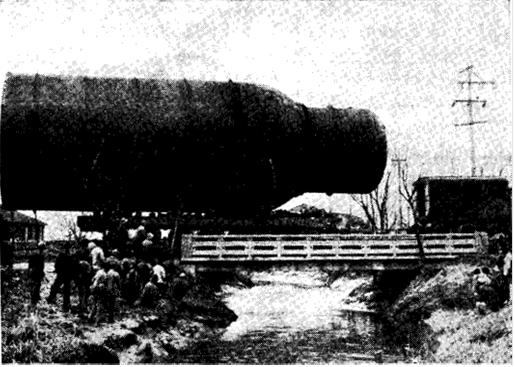
The contradiction between the load and the carrying capacity of our truck was solved by adding another trailer onto a wide one with 32 wheels, coupling it in a tandem arrangement between the truck and big trailer. We adjusted the length of the whole to the length of the furnace and added seme saddle-shaped supports in front and back to hold it steady. The “elephant standing on a ball” became an “elephant lying on flatcars.”
Then came another contradiction, that between the load limit of an ordinary bridge and the great weight of big equipment loaded on the big trailer truck. Once when we were taking a 120-ton item to an engineering project, we had sixteen concrete bridges to cross. Each had a load limit of thirteen tons for trucks and sixty tons for caterpillar tractors. How were we to get our 120-ton load over them? Some bridge engineers and technicians said it couldn’t be done, that the bridges would give way. We decided to analyze this contradiction before trying to find a solution. Chairman Mao says: “When we look at a thing, we must examine its essence and treat its appearance merely as an usher at the threshold, and once we cross the threshold, we must grasp the essence of the thing; this is the only reliable and scientific method of analysis.”
We concluded that three factors were in our favor:
First, a bridge with a load limit of thirteen tons for trucks could bear the weight of a 60-ton caterpillar tractor because the tractor’s large treads distribute its weight over a greater area of the bridge surface than do the truck’s tires. This realization was for us the “usher at the threshold.” Our rig is long and wide and has fifty-six tires. This gives it three times as much contact with the bridge as the caterpillar tractor. Thus, though the weight of our loaded truck is greater than that of the tractor, it would have about the same weight per unit area.
Second, the weight per unit area is affected by the speed of the truck. Driving slowly would reduce the vibration and strain on the bridge.
Third, investigation showed that all the bridges were in good condition, and actually quite strong. Our analysis led us to the conclusion that a bridge that could take a 60-ton caterpillar tractor could stand the weight of our 120-ton load. But we also thought: Chairman Mao and the Party have given us the task of transporting for this important project; we can’t be just 80 or 90 per cent sure, we must be 100 per cent sure. We asked the local authorities to mobilize the people and strengthen the weaker bridges and, on the day, we passed through, the local comrades worked hard alongside us to see that our truck and its huge load got across all the bridges all right.
Sharp curves on the mountain roads add to our problems. Just imagine getting our giant truck and its loaded long tail around hairpin curves! At a place called “Hell’s Gate” there was a sharp turn on a downgrade just before an upturn. The turning radius was 10 m.; our trailer truck with the added tractor needed at least 10.4 m.
Some suggested detaching the tractor, but would that leave enough pulling power? Suppose the truck got stuck at the turn, or fell over the cliff. Chairman Mao points out in On Contradiction that “of the two contradictory aspects, one must be principal and the other secondary. The principal aspect is the one playing the leading role in the contradiction.” We saw that in the contradiction between the length of the truck-with-tractor and the short radius of the turn; the former was the principal aspect. This is because the radius of the turn is fixed, but the length of the tractor-truck can be adjusted. The contradiction could be solved if we shortened the turning radius of our vehicle to 10 m. or less. Therefore, we decided to keep the tractor close to the truck and run the truck at full throttle so that it would take the curve mainly on its own power.
But another thing had to be taken into consideration in getting around a curve like “Hell’s Gate,” and that was that in taking the outer edge of the road one row of wheels (our trailer has seven axles with eight wheels on each) would be over the edge for an instant. Would this be dangerous? We figured it wouldn’t, that the truck’s power forward would maintain the centre of gravity and keep the remaining wheels steady even if the outer wheels hung over.
After a thorough study and full preparations, we started the truck. The driver kept a firm grip on the steering wheel, the head of our crew directed calmly and coolly, while the rest of us watched the wheels. Everything worked out as we planned and we passed success fully through “Hell’s Gate.”
Transporting equipment over eighteen provinces, municipalities and autonomous regions of the country, we have seen great changes. We’ve seen industries grow up all over the place where there were none before, and not just along the coast, as in old China. It makes us feel that we’ve got a lot more work ahead for our trailer truck and that we’ll need a lot more study of Chairman Mao’s philosophic works to do it better.
Weather Keepers for the Revolution
by Chung Tso County Weather Station Workers, Kwangsi Chuang Autonomous Region
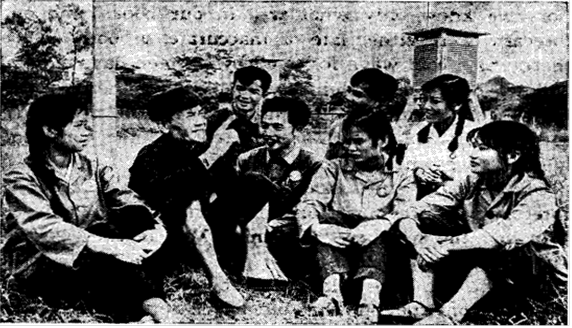
The seven of us at this weather station are all young. Some studied meteorology in university, others learned weather forecasting in technical schools or special training classes. Most of us came here after 1964, without experience. But the poor and lower-middle peasants depended on us very much for weather forecasting and said we were to be their “weather keepers.”
We, too, were enthusiastic revolutionaries, but because we had been influenced by the revisionist line in education, we knew only what was in our books, and our forecasts were either late or inaccurate, or both. Once there was a cold wave followed by thirteen days of rain. But we had forecast ten days of fine weather, so that early rice was sown. The result was that the rice shoots rotted, spring planting was affected, and the commune members were not satisfied with our work.
Our mistakes and setbacks taught us that in order to forecast well we must solve the contradiction between man and the weather. Chairman Mao teaches us that “it is people, not things, that are decisive.” We must appreciate the close relationship between our work and socialist construction, that our work serves proletarian politics. We determined to observe wind and cloud for the revolution, to be weather keepers for the people.
Learning from the Peasants
Following Chairman Mao’s teaching that correct ideas “come from social practice, and from it alone; they come from three kinds of social practice, the struggle for production, the class struggle and scientific experiment,” we went to the countryside for re-education by the poor and lower-middle peasants and to learn from them how they watched the weather.
The poor and lower-middle peasants welcomed us. An old poor peasant of seventy said, “In the old society I wasn’t bad at weather forecasting, but I couldn’t tell how I did it, or the landlord might have profited from it. Today we work for the revolution and I’ll tell you everything I know.” He gave us more than fifty pointers in weather forecasting.
With the poor and lower-middle peasants as our teachers we got 340 pointers, including a lot of common sense summed up in folk sayings. We learned how the peasants interpret sky conditions, such as a foggy morning turning into a sunny day, and also forecasting from insect movements. We learned to watch for ants moving their hills, worms coming up out of the earth, and dragonflies flying low. By using the peasants’ experience in combination with our book knowledge, we increased the accuracy of our forecasting considerably, which in turn increased our confidence in and reliance on the masses. We set up eight forecasting groups of experienced peasants in the county, and made a practice of asking their advice in our work.
Studying the Laws of Weather Changes
We further applied Chairman Mao’s teaching about “discarding the dross and selecting the essential, eliminating the false and retaining the true, proceeding from the one to the other and from the outside to the inside,” and put our knowledge into practice, summed up experience, made analyses in the light of Chairman Mao’s philosophic concepts, and formulated theories. We found our forecasting was further facilitated.
For example, beginning on May 15, 1969, there was moderate rain over the county for three days running, followed by warm days and cold nights. We checked our data against an old folk saying that “when the days are warm and the nights cold, the East Sea dries up,” and noted that as a rule if between May and September a rain was followed by variation in day and night temperatures of more than ten degrees, there would be a long dry period. We forecast drought, so that the commune members stored and saved water, and in fact the drought came.
As revolution and production developed, the poor and lower-middle peasants requested more accurate forecasts of such pronounced weather changes as typhoon and cold wave, and to make our forecasts far enough ahead of the change to enable them to plan their production well. This presented us with a challenge.
Cold waves are a threat to early rice seedlings, and to forecast their onset we made investigations among the old peasants and took into consideration their saying that “when the south wind blows hard, the north wind will return the visit.” We studied Chairman Mao’s teaching that “in given conditions, each of the two opposing aspects of a contradiction invariably transforms itself into its opposite as a result of the struggle between them,” in referring to our data. A contest between a cold and a hot air current usually resulted in a strong south wind. What were the conditions leading to the transformation into a cold wave? We found that if the wind from the south during the day was stronger than four meters per second (14.4 kilometers an hour) and kept up from four to six days, it gave rise to its opposite and a cold wave followed. We went on to determine variables in these conditions, and how long the cold spell would last. Our accuracy in forecasting cold waves was nine out of eleven times in 1969, and seven out of eight times in 1970.
Over the years we have often met with such a situation: when typhoons hit Kwangsi, our county either had heavy rain with gale-force winds, gales but no rain, heavy rain without gale, or was sometimes unaffected. Why? We studied this teaching of Chairman Mao: “It [materialist dialectics] holds that external causes are the condition of change and internal causes are the basis of change, and that external causes become operative through internal causes.” We carefully examined the meteorological data we had accumulated over the past twelve years and the peasants’ long experience, and found that the effects of the typhoon are determined by the internal causes of local meteorological factors, chiefly humidity. In July 1969, for example, when our county was busy fighting a drought, the regional weather service forecast medium to heavy rain in southern Kwangsi in the wake of an approaching typhoon. But in our county the humidity was not high, and provided no condition for heavy rain. We did not forecast rain, so that the county’s timely fight against drought was not halted.
The poor and lower-middle peasants, from their long struggle with nature, have discovered many interconnections in weather changes. For example, they say “a dry winter means a wet spring,” and “a cold winter means a warm spring,” and that “a long spell of good weather is sure to be followed by a continuous rain, and vice versa,” also that “when the moon is covered by clouds during the Moon Festival (the 15th day of the eighth lunar month), it will rain on the 15th day of the first lunar month.” From these interconnections they had drawn certain laws of weather changes.
We compared these connections with our meteorological data over twelve years. Our monthly charts revealed that interconnections of this sort occurred each 180 days. With this as basis, and considering other relevant factors, we diagrammed the weather pattern for each 180-day period. Thus, we achieved our accurate forecasts of heavy rain nine times out of eleven in 1969.

Still, our diagram only helped in forecasting rain, not the amount of it. Chairman Mao teaches us: “Often, correct knowledge can be arrived at only after many repetitions of the process leading from matter to consciousness and then back to matter, that is, leading from practice to knowledge and then back to practice.” To determine the amount, we collected data on heavy rains during July and August from 1963 to 1969, carefully analyzed the weather preceding the 180-day period, formulated some general laws and then charted the heavy rains, which helped in forecasting the volume of the rainfall.
Applying Knowledge to Practice
Chairman Mao points out: “Marxist philosophy holds that the most important problem does not lie in understanding the laws of the objective world and thus being able to explain it, but in applying the knowledge of these laws actively to change the world.” We followed this teaching, applying our knowledge of the laws of weather changes to our work, testing our forecasting and sum ming up our experience, not only to serve agriculture, but to serve industrial and other departments as well.
Our accurate forecast one August day when it looked like rain in the morning but did not actually rain until three in the afternoon enabled a production brigade, anxious to avoid seed sprouting, to sun their rice without worry that day.
One night at 11 o’clock we found that a rainstorm was coming and warned a railway station to cover ex posed goods. Hotels and hostels use our forecasts in planning their laundry, while transport departments consult our advance weather forecasts in loading and un loading, and arranging routes. Now the people of Chung Tso County say that we “really take care of the weather!”
Keeping Vegetables Fresh
by the Peking Chung Wen District Vegetable Station Scientific Experiment Group
As fresh vegetables of increasing variety have occupied a greater place in the Chinese people’s diet, the contradiction between the seasonal nature of these vegetables and the steady demand of the market became marked. During the height of the season, vegetables often went bad, while in off seasons the supply could not meet the demand. To solve this contradiction, it became necessary to store surplus vegetables, keep them fresh and supply the market in off seasons.
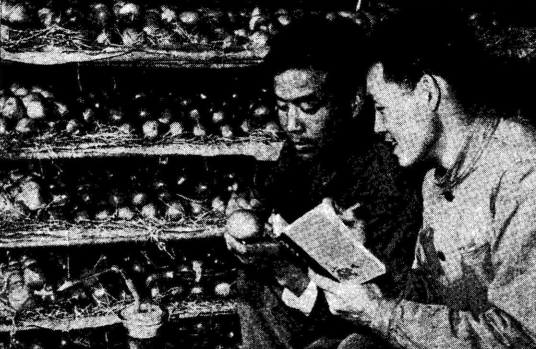
We tackled the problem from two sides: one was to work in close co-operation with vegetable-producing communes and brigades in the suburbs; the other was to mobilize the comrades of our station to solve certain problems in storing perishable vegetables. In 1968 we formed a three-in-one scientific experiment group of cadres, workers and technical personnel, with workers as the main force, and set out to use the philosophic teachings of Chairman Mao to help solve these problems through scientific experiment.
Three Tomatoes
We focused on tomatoes, known among truck gardeners as the “overnight headache,” because of their perishability. We tried storing them, and one day discovered three of our tomatoes still well preserved after more than a month. Why had the rest spoiled? Here, Chairman Mao’s teaching that it is “in the particularity of contradiction that the universality of contradiction resides” gave the clue. If three tomatoes could be preserved for over a month, it should be possible to preserve all of them. The conditions under which the three tomatoes had been stored were: low temperature, a certain humidity and good ventilation. These conditions had slowed down metabolism in the tomatoes and prolonged their period of wholesomeness.
In other words, controlled temperature, humidity and ventilation kept the tomatoes living longer. High temperature and humidity caused rot, while too low a temperature spoiled them by freezing. Too brisk ventilation dried them and made them lose their freshness. What was needed was to handle the relations among the three conditions well. We turned to Chairman Mao’s teaching that “in studying any complex process in which there are two or more contradictions, we must devote every effort to finding its principal contradiction. Once this principal contradiction is grasped, all problems can be readily solved.” We analyzed the three basic conditions of temperature, humidity and ventilation and experimented with different relationships. The contradiction between temperature and ventilation was apparently the principal one. Therefore, we took measures to maintain the correct temperature in the storage cellar.
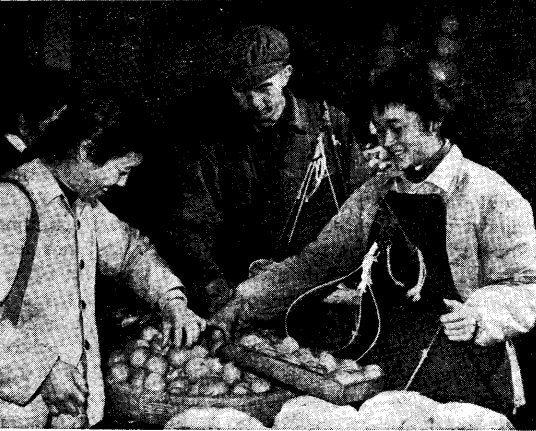
Then we turned to the problems of humidity and ventilation. By correctly handling the relation between the principal contradiction and others, that year we succeeded in storing four hundred tons of tomatoes in July for sale in later months. Thus, we took a first step in solving the contradiction between the seasonal nature of tomatoes and the constant demand of the market. Though we had some success in preserving tomatoes, we did not know much about their metabolism, that is, the laws of the inner contradictions of tomatoes. We realized that it was not enough to pay attention to external conditions such as temperature, humidity and ventilation. More important was to master the laws of the inner changes taking place in the tomatoes under storage, so that we could preserve large quantities and popularize our methods. Guided by Chairman Mao’s philosophic thinking, we further explored the laws governing these inner contradictions. We noted that even in the same basket, tomatoes underwent different changes. Those on top ripened quickly and couldn’t be stored long, while those beneath ripened slowly and could be stored longer. Noting this, we understood better the metabolism that went on in the tomatoes for a certain period after they were picked, that is, they went on giving off carbon dioxide and taking in oxygen. Basing on this, we continued our experiments, using new methods to control the respiration and metabolism of tomatoes, to make them take a turn favorable to lengthening the time we could preserve them and improving their quality. The result was that we turned the “overnight headache” into a “one hundred-day-fresh.”
Solving the Particular Contradiction of Onions
Our success in preserving tomatoes gave us confidence and inspiration to tackle the problem of storing other perishable vegetables. We experimented with onions. They are a bulb, very nutritious but apt to sprout, become hollow and rot when stored for a long time.
To prevent sprouting, we first tried the same method as for preserving tomatoes, that is, by controlling temperature, humidity and ventilation. It didn’t work. The onions were all right as long as they were in cold storage, but they sprouted all the quicker when they were taken out. We studied Chairman Mao’s teaching: “Unless we study the particularity of contradiction, we have no way of determining the particular essence of a thing which differentiates it from other things, no way of discovering the particular cause or particular basis for the movement or development of a thing, and no way of distinguishing one thing from another or of demarcating the fields of science.” With this as our guide, we specifically analyzed the characteristics of onions’ changes after they were picked and found that, different from tomatoes, they sprouted only after undergoing a dormant period. While a low temperature could prevent them from sprouting temporarily, it didn’t solve the contradictions fundamentally. They sprouted as soon as they were out of the cold storage and in a suitable temperature.
We tried something else. Instead of storing at a controlled temperature in the cellar, we sprayed a chemical on the shoots in the field before harvest. Onions thus treated did not sprout, and storage time could be extended. Our success with experiments on a small scale was popularized in the communes and brigades in the suburbs. But unexpected problems arose. Some of the chemically-treated onions still sprouted. The chemical, strength of the solution, and amount were all the same, why were the results different? We went to the fields to do careful investigation and analysis and found that dryness prevented absorption of the chemical, while rain washed it out. Besides harvesting time and cultivating methods, many factors affected the chemical treatment. With this understanding of how to use the chemical, we co-operated with the communes and brigades in overcoming the unfavorable factors affecting the chemical. We succeeded in solving the problem of onion sprouting, and supplied the market the whole year round.
Storing Cabbage
Chinese cabbage, a leafy vegetable, is stored in large quantities by the state, collectives and households every year. But some leaves fall off or go bad before being stored very long. Spoilage sometimes reached 40 per cent. At first, we didn’t know why cabbage kept or spoiled and could only take routine measures of storing and turning. Later, we went to a suburban production brigade and learned that experienced farmers estimated the temperature of the storage cellars according to how it felt on their ears, while they tested the ventilation by smelling. The brigade was thus able to maintain optimum storage conditions. Enlightened by their experience, we found that Chinese cabbage is a live organic whole. Though stored, the cabbages went on giving off carbon dioxide and taking in oxygen, that is, their metabolism continued. Insufficient ventilation caused rot. We set about experimenting and collecting data. At the beginning of the storage period, the end of November, when the relatively high temperature caused rot, we turned the cabbages often and opened the door to lower the temperature of the storage cellar. At the middle of the storage period, in freezing weather, the lowest temperature would freeze them, so we ventilated and turned them during the warmest part of the day so as to keep the temperature around zero. At the end of the storage period, after the cabbages had been kept for a long time, and as the temperature in the storage cellar gradually rose, they sprouted readily. Then we kept the temperature down. We also used a chemical to prevent them from sprouting. In this way we reduced the damage.
Chairman Mao says: “Processes change, old processes and old contradictions disappear, new processes and new contradictions emerge, and the methods of resolving contradictions differ accordingly.” After solving the primary problem of rot, the secondary problem, that of leaf shedding, became the principal contradiction. We again used chemical treatment and solved this contradiction, but we noticed that the cabbages treated with the chemical were easily damaged. Analysis showed that the chemical increased their ability to hold water. The treated cabbages were fresh but delicate, so that damage and resulting contamination were apt to occur. The old ways of turning, piling up and ventilating would not do for chemically treated cabbage. We adjusted the amount of the chemical, and changed the way of piling up and the turning time, according to the length of storage time. The result was that rot was decreased, preserving time considerably lengthened, and the popular demand for fresh cabbage in winter was met.
After our successful experiments in keeping tomatoes, onions and Chinese cabbage fresh, we worked with other vegetables such as sweet peppers, cauliflower, potatoes and garlic. Some common rules for storing succulent and leafy vegetables, and tubers, were arrived at and we thus solved some of the problems involved in bringing fresh vegetables to the tables of more people in all seasons.
Patients with Broken Backs Walk Again
by the Peking Hospital of Traditional Medicine, Paraplegia Group
Our paraplegia multiple treatment group, formed in March 1969, was specially charged with treating patients with traumatic paraplegia (paralysis of the lower part of the body caused by injury).
Guided by Chairman Mao’s philosophic thinking and his idea of combining Chinese traditional and Western medicine, we have had initial success in curing this “incurable” condition.
Of the 151 paraplegia patients we have treated in the past three years, 124 can now walk with crutches, while 15 get about without any aid. Eight have gone back to work.
Curing the “Incurable”
Traumatic paralysis of the lower part of the body is caused by a fall or other accident resulting in fracture of the patient’s spine and damage to the nerves of the spinal cord. The patients became bed-ridden, and in time suffered from muscle atrophy, incontinence and bed sores. Bourgeois medical “authorities” routinely pronounced traumatic paraplegia “incurable.” After China’s liberation in 1949, revolutionary medical workers made great efforts to correct this condition, but Liu Shao-chi’s pernicious counter-revolutionary revisionist line in medical and health work interfered, and their efforts were futile.
Then, during the Great Proletarian Cultural Revolution, we criticized this hindrance of the Liu Shao-chi revisionist line in medical and health work, raising our class consciousness in the process. We were eager to relieve traumatic paraplegia patients of their suffering, but were doubtful whether the condition could really be cured.
After studying Chairman Mao’s philosophic teaching that “the movement of change in the world of objective reality is never-ending and so is man’s cognition of truth through practice,” we realized that man’s knowledge in curing illness has also developed through practice from ignorance, and passed from little to substantial knowledge. “Incurable” illnesses of the past are curable today. Considered from the dialectical-materialist viewpoint no disease in the world is absolutely incurable. Those who are determined to learn through practice can grasp the laws of overcoming diseases step by step in the course of struggle against them.
Clinical experience shows the loss of motor function and the incontinence as resulting from badly damaged spinal nerves. But not all the nerves are damaged, and efforts should be directed at making the patient’s undamaged spinal nerves play their maximum role, and also at restoring the function of the damaged nerves as far as possible.
Following Chairman Mao’s teaching to combine Chinese traditional and Western medical practice, we availed ourselves of modern knowledge of the nerves, muscles and skeletal frame and adopted two traditional methods of treatment: acupuncture, and Chinese traditional drugs. At the same time, the patients kept up reasonable functional exercise under doctors’ supervision. Extended clinical practice has revealed some new acupuncture points. A traditional medicine with appropriate toxicant ingredients has been developed and functional exercises of the limbs have been worked out for the early stage. These measures have virtually changed “incurable” into curable.
Real Knowledge Comes from Practice
We started out using ordinary therapeutic acupuncture, but got no appreciable results. This acupuncture method obviously did not conform with the law of curing traumatic paraplegia, and new methods must be found. At that time the People’s Liberation Army was getting good results with strong needling for overcoming the after effects of infantile paralysis, and their work greatly inspired us. If we could find acupuncture points that would transmit a very strong stimulus to the spinal nerves, might that not facilitate motor function? We discussed the possibility, and thought it would. Combining acupuncture with modern knowledge concerning the nervous system, we began to formulate a new medical treatment: deep needling at the spinal nerve root.
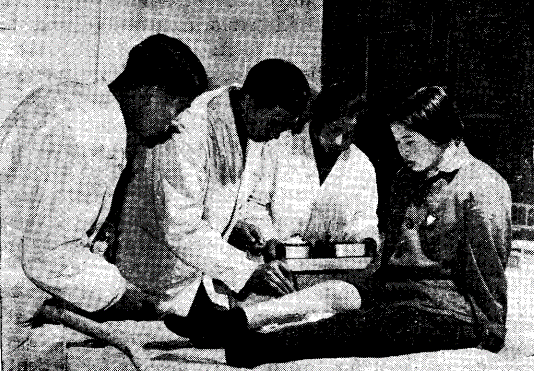
In our search for new acupuncture points we made a practice of needling on ourselves or on each other. A comrade medical worker had the needle inserted at his waist in the area of the spinal cord. At three cun 3 he reported a feeling of combined soreness, swelling, heaviness and numbness that was transmitted down the thigh. The muscle of his thigh quivered, and he perspired. The comrade inserting the needle asked whether he shouldn’t withdraw the needle, but he said firmly: “Insert deeper!” At four cun he experienced an excellent needling sensation, and a new point had been found in treating traumatic paraplegia. We used this new point in clinical practice with good results in restoring sensation and the power of movement in the lower limbs.
In order to bolster the therapeutic effect, we summed up experience in using drugs in such cases and decided to add a spinal nerve stimulant to the ingredients of the traumatic paraplegia pills. But, as the nerve stimulant is highly toxic, the amount must be determined with the greatest accuracy. We tried taking doses of the drug ourselves in order to determine its properties, safe dosage, and physiological effect. After repeated experiments we arrived at a formula that satisfied the requirements.
Next was the question of exercise. Can patients be given functional exercises in the early stage of treatment? We didn’t know. Western practitioners stressed absolute bed rest for two or three months for patients with fracture of the spinal column, and Chinese traditional orthopedists also favored a hundred days immobilization. Clinical practice, however, gradually gave us new understanding of this question.
A veteran worker, Tung Shan-Yun, was admitted to our hospital twenty-four days after injury. On admission he needed help even to turn over in bed. Conventional treatment would have been absolute bed rest. Actually, though bed rest is necessary for fracture reduction, prolonged immobilization causes muscle atrophy, joint stiffness and general deterioration of the patient’s health. There was contradiction between reducing the fracture and functional recovery. We recognized that relative in activity was indicated in view of the patient’s damaged spine. This was the principal aspect of the contradiction. Still, when the fracture was reduced to a certain degree, the recovery of function became more important. If we let the patient do appropriate functional exercises fairly early, they would favor bony union and the patient’s general health. Muscle atrophy and other undesirable effects of prolonged inactivity would be avoided.
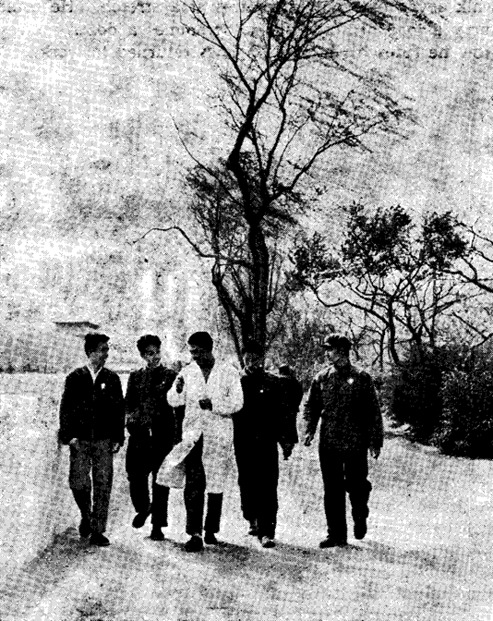
We studied the experience of veteran Chinese traditional orthopedists and also that of orthopedic surgeons of the Western school. We went to medical reference books on such cases. We learned that the fibrous union of the broken vertebrae usually takes place two weeks after a fracture, that the soft tissues heal even sooner. On the basis of this, added to our own practice, we worked out a treatment plan combining acupuncture, traditional medicine and early functional exercise. On the thirty eighth day after this veteran worker’s injury, we let him walk holding onto his wheel chair. Events proved that this method not only facilitated ambulation, but also built up his health, which in turn was beneficial to fracture reduction. Later, we applied this experience in treating a patient, Li Jui-Yun, whose spinal column was injured at the neck, chest and waist. He had been in bed for two months prior to admission to our hospital. According to our old practice, the patient should be kept in bed for from three to six months. But we put him on functional exercises immediately on admission. After two months of treatment, he could walk forty meters without any aid.
Help the Patient to Help Himself
Traumatic paraplegia patients have been known to lose all confidence in treatment, because of the required long immobilization which results in serious damage to functional capacity, not to mention the mental strain of considering oneself an invalid for life.
After studying Chairman Mao’s teaching: “It [materialist dialectics] holds that external causes are the condition of change and internal causes are the basis of change, and that external causes become operative through internal causes,” our medical group recognized medical treatment as only the external factor. We must strengthen the internal factor, that is, the patients’ confidence that they could overcome their disease for the revolution. Medical treatment required the patient’s display of initiative, which bolsters the therapeutic effects of the acupuncture and the medicine.
Chairman Mao says that “each thing in its movement is interrelated with and interacts on the things around it.” A disease affecting a certain part of the body influences other parts, while on the other hand, the condition of the general health affects the pathologic process. Functional exercise for the patients is important for building up their health, and activating function of vital organs and the tissues.
Our patients have overcome many difficulties, and with firm will to make revolution, they perform the functional exercises. There were difficulties. Some patients had pain during the exercise, while some even felt faint or nauseous when they got out of bed for the first time. But, in order to return to work as early as possible, they have gained confidence, not only that they can sit up, but also that they can stand beside the bed. The next step was to practice walking. At first it was very difficult for them to move their feet, because the function of the limbs was only just recovered. But, reciting the teaching of Chairman Mao: “Be resolute, fear no sacrifice and surmount every difficulty to win victory,” they kept up their daily functional exercise. Their improvement was marked. Limbs regained their function, muscles grew stronger, incontinence was alleviated and the patients could walk. The veteran worker Tung Shan-Yun could walk three hundred meters without crutches on the fourth month after his injury. In the ninth month he could walk seven or eight kilometers at a stretch. He could carry a load of sixty-five kilograms a dozen meters. Now he rides his bicycle and has returned to work.
Delivering Dead Letters
by Chao Ching-Chuan
In my many years of work as mailman at the Yian County post office in Heilungkiang Province I’ve had many letters with unclear names and addresses that have simply been dropped into the dead-letter box. Or, if a return address was given, we stamped them “Addressee unknown” or “No such address” and sent them back. We began wondering if all those dead letters could not be changed into living ones. Practice was continually showing that Mao Tsetung Thought, the spirit of serving the people and using materialist dialectics makes this possible. Since 1968 I have delivered several hundred dead letters.
There are also parcels. In October 1968 we received one from Hailun County containing a pair of cotton padded trousers. It was addressed “Fang Yu-Hsi, Yian Leather Co-op.” When I delivered the notice that the parcel had arrived, I was told there was no such person there.
That evening as I took out a return slip and was about to write “Addressee unknown,” I suddenly looked at the frost on the windows. Winter was coming. Someone would be needing the padded trousers! If I filled out the slip and sent it back, I would be shirking my responsibility, failing to be “more concerned about others than about himself” as Chairman Mao teaches.
I at once wrote a letter to the sender, asking him to give us the correct name and address. Sure enough, several days later we received a letter saying the name was not Fang Yu-Hsi but Fang Yu-Hsueh, that he did not work at the leather co-op but was only visiting a friend who worked there. The sender knew only that his friend’s family name was Chi.
I went to the co-op again and found a young man named Chi, but no one had visited him recently. When I told him the story, he said a friend had come to see his father. At his father’s home I learned the friend was Fang Yu-Hsueh, who would have his padded trousers for the cold weather.
Quite obviously, turning dead letters and parcels into live ones is mainly a matter of one’s outlook on life. If we don’t want to serve the people wholeheartedly, we’ll be unable to do things which can be done. But, if we turn our deep proletarian feeling into devoted service to the people, we can do many things considered impossible, and do them well. Another thing I’ve learned is that we need to be good at using the scientific method if we’re to do things well, even though we may have all the good intentions in the world. Chairman Mao says that “the law of the unity of opposites is the fundamental law of the universe.” A letter’s being dead or alive is not final and unchangeable. Things can be changed into their opposites.
Over the years, studying the laws governing delivery work, I have acquired some experience in getting dead letters where they belong. When addresses are not precise, I consult old residents of the district. If it’s a woman, I go to the older women for information. Mix-ups sometimes occur in names which sound correct but have been written wrongly; and I’ve found that house numbers often get reversed. A parcel from Ahjung Banner4 in Inner Mongolia was addressed to a certain person at No. 25 Tungnan Street, but when I called at that address, there was no such person there. I thought: Ahjung Banner is Mongolian. Who on my route might receive letters from Inner Mongolia? Which family had relatives there? I had in mind a dozen or so from among the two thousand households on Tungnan Street. Sure enough, the number had been reversed — I found the addressee at No. 52.
We’ve learned we must use the materialist dialectical principle, “one divides into two,” in analyzing problems. We must see that a positive and a negative aspect will develop out of any situation. This means a favorable side and an unfavorable side, difficulty on the one hand, facility on the other. Only when we analyze problems this way can we make correct judgements and have confidence in overcoming difficulties.
In February 1969 the revolutionary committee of our post office received a letter from Chien Chang Commune in Shantung Province. The sender, a woman named Wang Hsiu-Lan, requested help in locating her parents, from whom she had been separated for twenty-five years. She said she had come from our county, but had left her parents in 1944 when she was sixteen and gone to Shantung. The Japanese aggressors were then rampaging through the country, and everything was in chaos. She had lost touch with her parents at that time. As I read her letter I was deeply moved. It was not only a request, but her bitter family history, an accusation of the plundering Japanese imperialists’ crimes. I accepted the task with deep proletarian class feeling.
Her letter gave meager details. She had lived in Tungwu Tao Street, it said, opposite a store run by a family named Liu. Her father’s name was Wang Chen-Lin and she had a brother-in-law named Keng Chang-Chun.
From this sparse information I thought over both the favorable and unfavorable aspects of the problem. Twenty-five years was a long time. The people concerned were probably widely scattered. This was the difficult and negative side. On the other hand, the letter had given the exact year the girl left, the address where she had lived, and the names of persons I could look up. This was the positive side.
I decided to start with the Liu family store, and I asked more than a dozen old people, but none of them knew of it. There had been no private stores for many years, but was the Liu family not still in some sort of commercial enterprise? I went to stores, restaurants and inns, locating several men by the name of Liu who had run stores in the past. But none of them knew of Wang Chen-Lin. Was I to give up or go on?
Chairman Mao teaches us, “Like every other activity in the world, revolution always follows a tortuous road and never a straight one.” As long as we recognize difficulties, analyze them and fight them, we can find ways to solve them. I was sure I could find this woman’s family. I widened the area of my investigation, visiting old handicraftsmen in factories and co-ops roundabout. One day when I mentioned Keng Chang-Chun to an old worker in a dried fruit co-op, a customer interrupted to tell me that he knew a Keng Chang-Chun. He worked at an inn near South Gate.
There, I met a man named Keng. I thought, if his wife’s family name is Wang, my task is accomplished. But when he told me her name was Yang, I was disappointed and turned to leave. But I should have told him the whole story, I thought. Perhaps he could give me a clue. I told him about Wang Hsiu-Lan’s letter and read it to him. He told me he had a younger brother, Keng Ming-Chun, who was working in Fularchi, a town south west of Tsitsihar. His wife’s family name was Wang and her parents lived in Shuang yang Commune in our county.
I wrote to Keng Ming-Chun and received a letter back, saying it was true that his wife had a sister who had left in 1944 and that they had not heard of her since. He gave me the address of his father-in-law, Wang Chen-Lin at a production team of Shuang yang Commune, Yian County, and I telephoned there. Next day I got a letter from Wang Chen-Lin, saying, “Wang Hsiu-Lan in Shantung Province is the daughter we have been searching for all these years. Now Chairman Mao has helped us find her. What a family reunion we’ll have!” The letter was signed “Commune member Wang Chen-lin.”
I sat right down and wrote to Wang Hsiu-Lan to tell her the good news. Her answer was as prompt. She said that her family would show their gratitude to Chairman Mao by doing a good job of gathering in the harvest, and that after that they would visit her parents for the family reunion.
4 Footnotes