Program and Statute of the Committee for the Reconstitution of the Communist Party of Yugoslavia
Return to Yugoslavia
Program and Statute of the Committee for the Reconstitution of the Communist Party of Yugoslavia 1
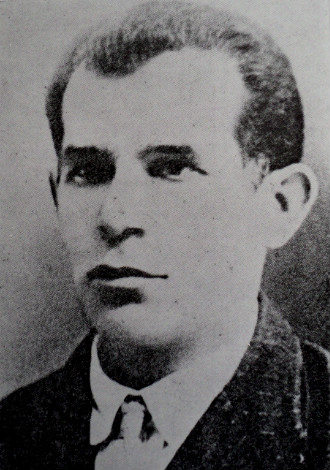
Comrade Đuro Đaković
Committee for the Reconstitution of the Communist Party of Yugoslavia
March 12th, 2026
Program
THE RECONSTITUTION OF THE COMMUNIST PARTY OF YUGOSLAVIA UNDER MAOISM IS THE MAIN TASK OF THE THINKING SOCIALIST PROLETARIAT
The Communist Party of Yugoslavia, as the flesh and blood of the Yugoslav proletariat, despite the difficult and turbulent periods that befell it on its way, persevered in the struggle for the historical communist program and undertook the magnificent task of conquering power in the service of the world proletarian revolution. Over these territories it raised the scarlet red flag, the seal of its service to the proletariat of the world and to the only idea worthy of the sacrifice of its best daughters and sons – communism.
Those who fought for the emancipation of humanity did not care about the price. The communist fighters paid with unprecedented suffering for their unyielding class position. Proudly carrying the red banner, the storms of the class enemy and the insidious revisionism could not erase their enormous, invaluable revolutionary heritage that forever chained them to immortality. The enemies of the people are today trying to drag the proletariat off the glorious path that it had painstakingly won for decades, starting with the liquidation of the Party in 1948. The treacherous hands of revisionism have taught the masses its modus operandi – the practices of social-fascism sweetened with the story of social transformation. To this day, wherever they appear, the revisionist bastards, shamelessly plundering the name of the Party, seek to exhaust the forces of the masses in a fight that was already lost. However, the years of revisionism’s influence have once again shown its rotten nature and thereby taken away all credibility. The proletariat and the oppressed classes can no longer be deceived by revisionist lies and deceptions. The most revolutionary class, which once soaked the country in blood to free it from traitors and occupiers, understands best what the real, truly revolutionary Communist Party of Yugoslavia represents – it understands best because it cries out for it.
In the midst of complex historical circumstances, the Communist Party of Yugoslavia is today in the phase of its own reconstitution. We wage slaves do not need formal education, so that we can clearly see that the main need of the class struggle of the proletariat of the former Yugoslavia is the reconstitution of that party, that is, of an advanced and organized detachment of our class. In accordance with this, the main contradiction that the communists in the making of the former Yugoslavia must face today is the contradiction between liquidation and reconstitution. The thread adorns the work, thinking that the socialist proletariat that rises up against liquidation and crushes the enemy before it will clean out of its trough all the liquidationist garbage that has been thrown there, and if revisionism dares to try to turn the course of that force, it will sweep it and everything that opposes the class away from the face of the earth, because progress is much more precious than promises, phrases and platitudes!
It is quite understandable that our work, which was still essentially pioneering, could only set itself modest tasks up to now. Thus, the Committee for the Reconstitution of the Communist Party of Yugoslavia was initially founded on the basis of a short document “Raise the red flag of Maoism in order to fulfill the task of reconstituting the Communist Party of Yugoslavia!” – although still immature and undeveloped in its content, the significance of that short document was that it called for the first time in the former Yugoslavia for unification under the banner of Maoism and that it set the great task before our emerging communists of the reconstitution of the Communist Party of Yugoslavia. Having assessed that the movement in the former Yugoslavia was in an epoch of theoretical confusion, the activities of the like-minded people united in our organization were primarily concerned in the following period with the renewal of the theoretical foundations of Marxism and with the theoretical confrontation with revisionism.
Our work is now moving from the general and abstract to the particular and concrete, this is a necessary condition for a fruitful struggle for the reconstitution of the Communist Party of Yugoslavia. This extraordinary task can be accomplished, as the entire experience of the international proletariat has shown, only with the establishment of a program (the immediate and final goals of the movement) that gives the revolutionary fighters for communism a basis and foundation of ideological unity, a banner that mobilizes and unites. However, just as there are two programs in the revolution, two strategic plans – Bolshevik and opportunist – so there are also two forms of organization. Only the Bolshevik unity of programmatic, tactical and organizational understandings can be the real granite foundation that will guarantee the success of our effort for reconstitution. Therefore, it is not enough for Marxist-Leninists-Maoists, unless they want to become something like a family circle, to fight only for a revolutionary program. A reality that is much more radical than ourselves demands that we also fight for a revolutionary organization, that is, for the creation of an organization that is capable of realizing this program.
It is clear that our task is particularly complex, and therefore at this moment we limit ourselves only to indicating the general direction and main issues of our revolution. We do not have the opportunity to confirm here with exhaustive evidence each of our theses, but we are ready to do so if our opponents wish. We believe that this is precisely the significance of this Program and Statute, which was adopted at the First National Conference of the Committee for the Reconstitution of the Communist Party of Yugoslavia.
I. CAPITALISM
From its inception, the existing social order has contained within itself all the elements of its own downfall. The revolutionary bourgeoisie, whose mode of production could not be brought into harmony with local and class privileges, shattered the feudal order and on its ruins erected the empire of equality of commodity owners, free competition and other bourgeois wonders. This world-historical undertaking allowed the capitalist mode of production to develop freely and overcome its feudal shackles with unprecedented speed. But this development leads the existing social order to its own dissolution, transforming the vast majority of the population more and more into proletarians, a class which sees in its self-alienation the reality of its inhuman existence.
The main feature of capitalist society is commodity production, which has developed to a high degree its highest form, capitalist commodity production. The essence of the capitalist mode of production is the appropriation of social labor, organized by the commodity economy, by individual persons. While in pre-capitalist formations exploitation served exclusively the purposes of consumption, in capitalist society production is no longer produced directly for one’s own needs or the needs of the exploiting family, but for the market. The basic contradiction of this society is the contradiction between the social character of production and private ownership of the means of production.
This contradiction inherent in the capitalist mode of production is the source of the social war between labor and capital, that is, between the proletariat and the bourgeoisie. It is also the source of the surplus production characteristic of our society, which is expressed in more or less acute crises of overproduction. Since the development of capitalism means the expanded reproduction of its fundamental contradictions, the only solution to all the evils arising from the capitalist mode of production is its overcoming through socialist revolution.
The proletariat, as a class which, because of its economic position, must sell its labor power, is presented with the conditions of existence of bourgeois society as something accidental, over which the individual proletarians have no control and over which no social organization can give them control. Therefore, in order to achieve self-respect as a person, the proletariat must abolish and overcome its own conditions of life, but it cannot abolish them without abolishing all the inhuman conditions of life of the existing social order which are summed up in its situation. This makes it the leading force of the revolution and the most revolutionary class in history. On the other hand, the bourgeoisie sees its own power in its self-alienation and possesses in it the semblance of human existence. Both are forms of the world of private property and stand in contradiction to each other.
The division of society into classes implies that the “view of life and the world” characteristic of a given epoch does not have a single character – it is different and varies according to their position, their aspirations and the course of their struggle with each other. The Committee for the Reconstitution of the Communist Party of Yugoslavia emphasizes the following in this regard:
- Bourgeois philosophy, in its various idealistic shades, carries out the social mandate of its class: it seeks to perpetuate the order of exploitation of man by man, but it is forced to disguise this exploitation as progress and progressiveness, and to present its class interest as the interest of society in particular. Bourgeois ideology is therefore permeated with hypocrisy, and the more life reveals the falsity of this ideology, the more sublime and moral the language of the bourgeoisie becomes.
- Proletarian philosophy, that is, modern dialectical materialism, arose as a natural result of human society, of the centuries-old development of science, and as a theoretical generalization of this development from the position of the most revolutionary class in the history of society – the proletariat. Only when the social contradictions that were maturing in the lap of capitalism began to manifest themselves in fierce class clashes between the proletariat and the bourgeoisie did it become possible for the brilliant minds of Marx and Engels to destroy the theoretical foundations of metaphysics and create a new, truly scientific, dialectical method, and to draw from the position of the proletariat all the conclusions that arose from social development, and especially from the aforementioned struggles between the proletariat and the bourgeoisie.
The social revolution of the proletariat, which replaces private ownership of the means of production and exchange with social ownership and introduces a planned organization of the social production process, in order to ensure the well-being and real development of all, will destroy the division of society into classes and thereby liberate all oppressed humanity, destroying all forms of exploitation of one part of society over another.
The necessary condition for this social revolution is the dictatorship of the proletariat and the successive cultural revolutions, that is, the establishment by the proletariat of such political power as will enable it to destroy all resistance on the part of the exploiters. The Communist Party sets itself the task of preparing the proletariat for the accomplishment of its great historical mission, of organizing it into an independent political party capable of conquering power in opposition to all bourgeois parties, of revealing to the entire working masses the necessity of the social revolution.
II. IMPERIALISM
The process of concentration and centralization of capital, destroying freedom of competition, led at the beginning of the 20th century to the merging of finance capital with highly concentrated industrial capital and the formation of powerful alliances of capitalists which acquired decisive importance for the whole of economic life. In this way, capitalism attempted to replace the anarchic mode of capitalist production in the large capitalist countries, but without eliminating its inherent contradictions. On the contrary, the contradictions became more acute and the economic division of the world, already divided among the richest countries, began. This new, final stage of capitalism, the stage of finance capital, which inevitably intensifies the struggle between individual capitalist countries, is the stage of imperialism.
Modern monopoly capitalism, in order to achieve more or less regular expanded reproduction, needs to make not average, but maximum profits. This is the driving force of imperialism, which determines all the most important phenomena in the field of its development and explains its contradictory development. The need to achieve maximum profits pushes monopoly capitalism to such steps as the subjugation and systematic plunder of colonies and semi-colonies, the transformation of a number of independent countries into dependent countries, the organization of new wars, which are the best “business” for modern monopoly capital to extract maximum profits, and finally, attempts to gain world economic domination. Hence imperialist wars, wars for domination over the largest part of the world’s surplus value, inevitably arise.
With the transition of capital to its monopoly and final stage, the historical period of the world bourgeois revolution ends, the bourgeoisie class passes into the camp of counter-revolution, and together with the Great October Socialist Revolution, a new era is opened, the era of the decline of capitalism, the era of the world socialist revolution. The main force of this revolution is the proletariat of the capitalist countries, and its allies are the peoples of the oppressed colonies and semi-colonies.
The bourgeoisie of the advanced countries has completely trampled on the principle of the equality of nations and replaced it with the principle of the full rights of a handful of imperialist countries to freely exploit the vast majority of the world’s population. (Stalin) Imperialism shamelessly and heartlessly plunders all the countries of the third world, that is, 3⁄4 of humanity, while at the same time maintaining relative peace at home, feeding the fruits of its plunder to a huge layer of bribed labor aristocracy. At the same time, the imperialist bourgeoisie is forced by the force of the general tendencies inherent in imperialism to increasingly increase the exploitation of surplus value on its territory, which, combined with crises and preparations for the redivision of the already divided world, worsens the position, and to a certain extent leads to the disintegration, of the labor aristocracy.
The international proletarian movement, as a movement that has to accomplish the great work of social transformation, must be anti-imperialist in the era of monopoly capitalism, because the changes in the international situation have transformed the national question from an element of bourgeois-democratic to an element of proletarian-socialist revolution. Regardless of which classes, parties or individuals in the oppressed countries join the revolution and regardless of whether they are aware of this fact and understand it, their revolution becomes a part of the proletarian-socialist world revolution, and they become its allies if they oppose imperialism. Therefore, the development of popular revolutions in the colonies and semi-colonies, to which category all the countries of the former Yugoslavia also belong, is an important moment for the proletariat class because it undermines the positions of capitalism at the root and transforms these countries from reserves of imperialism into reserves of proletarian revolution.
In this work, however, the national bourgeoisie is not a consistent ally. Being under the pressure of imperialism, it may have revolutionary passions and at certain moments and to a certain extent may participate in the revolution and fight against imperialism – but it lacks the courage to break completely with imperialism and feudalism because it is economically and politically weak and is still economically linked to them. Since all this is true, the proletariat remains the only class which in the oppressed colonial and semi-colonial countries can undertake the task of raising the national banner and being at the forefront of that struggle whose blade is directed against imperialism.
Under the leadership of the proletariat class, the struggle for national liberation from imperialism overcomes its bourgeois nationalist content and takes on an internationalist content. Although such a revolution is still fundamentally bourgeois-democratic in its social character, it is no longer the old revolution led by the bourgeoisie for the sake of subduing bourgeois society under bourgeois dictatorship. It is a new revolution whose aim is to create, in the first stage, a new democratic society and state under the common dictatorship of all revolutionary classes. Such a revolution attacks imperialism at its very roots and creates favorable conditions for a continuous transition to socialist revolution. Therefore, a democratic revolution of a new type, a new democratic revolution, overcomes the nationalist character of the bourgeois-democratic revolution and becomes an integral part of the proletarian-socialist world revolution.
The Great October Socialist Revolution, by its appearance and its consequences, proved that the foundations of the old capitalist order were crumbling. Unable to master the productive forces it had created, capitalism led itself to a world war and, through this, to its obvious catastrophe by overthrowing the imperialist bourgeoisie in one of the largest capitalist countries in the world and placing the socialist proletariat in power. By undermining imperialism, the October Revolution at the same time created a powerful and open base for the world revolutionary movement, the Union of Soviet Socialist Republics, a center around which a united front of the proletarians and oppressed peoples of all countries against imperialism could be gathered and organized.
This great feat of the thinking socialist proletariat was greeted by the enemies of the revolution with loud prophecies that ordinary workers and peasants would not be able to manage the complex economic, cultural and political life of such a vast country. Soon the “prophecies” of the imperialists and their lackeys turned to dust. The Union of Soviet Socialist Republics destroyed once and for all the reactionary idea that the proletariat cannot rule without an exploiting class. Despite enormous internal and external obstacles, the Soviet government, led by Lenin and Stalin, grew stronger day by day, courageously implementing the most radical social changes and advancing towards communism.
All the policies pursued by the ruling classes of the entire capitalist world during and after the Great Socialist October Revolution only further undermined the foundations of the existing order. Before the capitalist world could catch its breath, the Second World War broke out from the same basic causes as the First. The immediate preparation for that war was the emergence of fascism as an open terrorist dictatorship of the most reactionary and aggressive elements of finance capital. The victory of fascism in a number of countries, aided by the treacherous role of social democracy and by the concessions made to it by the ruling monopoly circles of England, France, America and other countries in order to turn it against the international workers’ and anti-imperialist movement, marked the intensification of the crisis of capitalism and the preparation of aggressive plans for a new division of the world.
The Second World War ended with the collapse of the single, comprehensive world market, the tremendous growth in the power and role of the Union of Soviet Socialist Republics, the fall from the capitalist system of a whole series of countries, the most important of which was the Chinese revolution, the unprecedented expansion of the workers’ and anti-imperialist movement throughout the world, and the wars of liberation in colonial and semi-colonial countries. The forces of imperialism were weakened, and the forces of socialism were significantly strengthened.
The revolutionary, democratic and socialist transformations that took place in a number of countries in the pre-war and post-war periods are an integral part of the revolutionary world-historical events that were initiated by the Great October Socialist Revolution. This process manifests the general development of modern society, the main tendency of which is revolution.
All this shows that, first of all, as Comrade Stalin explained so well, the October Revolution dealt world capitalism a mortal wound from which it will never recover. Capitalism can never regain the “balance” and “stability” it had before the Great October Socialist Revolution. The usurpation of Lenin’s and Stalin’s parties by revisionism, the degeneration into social-fascism and the eventual disintegration of the Union of Soviet Socialist Republics do not change the significance of this mortal blow that the October Revolution dealt, and no one is able to turn history back, because the development of capitalism has reached a stage where the flame of revolution must inevitably break out, a chalice in the centers of imperialism, a chalice on the periphery.
III. KINGDOM OF YUGOSLAVIA
The Great October Socialist Revolution was of paramount importance for the development of the revolutionary and workers’ movement in the Balkans. In the general revolutionary ferment that encompassed central and southern Europe, every victory of the revolutionary Soviet government reverberated throughout even the most remote parts of Serbia, Montenegro, and the Slavic parts of Austria-Hungary. The national policy of the Bolsheviks was particularly influential on the oppressed South Slavic peoples, as it decisively rejected and exposed the old bourgeois understanding of the national question, transforming it from a special question of the struggle against national oppression into a general question of liberation from imperialism.
Initially, the Entente imperialists wanted to save Austria-Hungary, the bulwark of conservatism in Central Europe, from complete destruction. The South Slavic bourgeoisie, at the instigation of the Entente imperialists and with the support of international Austrophiles and petty-bourgeois compromisers, advocated the autonomy of the oppressed Slavic peoples within the framework, rather than the complete destruction, of the Habsburg Empire. Only when it became obvious that in the face of the revolutionary crisis the Austro-Hungarian Habsburg Monarchy, amidst its own internal contradictions, could not be saved did the South Slavic bourgeoisie rush to establish its own administrative apparatus in order to prevent the formation of Soviet republics like those already formed in Vojvodina and Slavonia.
The creation of a unified state of the South Slavs – this was the historical task facing the South Slavic peoples and their true desire. Neither national oppression nor the incitement of religious differences would be possible within the framework of the Balkan Democratic Federation with complete and consistent democracy. The South Slavic peoples would be ensured a broad and free development. Instead, through a compromise of counter-revolutionary forces and under pressure from the imperialists of the Entente, the “unified state” created on the ruins of the Habsburg Empire took the form of a prison of peoples forever tarnished in the memory of the Yugoslavs, the Kingdom of Serbs, Croats and Slovenes, later the Kingdom of Yugoslavia.
The Greater Serbian bourgeoisie played a major role in the political life of Yugoslavia, and the central political figure in Yugoslavia was King Alexander. This arose from the fact that only the Serbian bourgeoisie had an army during the unification, which was of extraordinary importance to the counter-revolutionary forces for establishing their own administrative apparatus in the territory of Yugoslavia. Initially, a regime of “liberal” monarchy was introduced, essentially a compromise between the Slovenian, Croatian and Serbian bourgeoisie, but the Greater Serbian bourgeoisie, in order to surpass its Slovenian and Croatian equivalents, had to adhere to the Greater Serbian program that required it to make its power independent of the National Assembly and the government. Thus, with the Vidovdan Constitution, the power of King Alexander was officially sanctioned, and later the entire parliamentary system gave way to a monarcho-fascist dictatorship. Such rule allowed the Greater Serbian bourgeoisie to create a favorable position for itself vis-à-vis the Slovenian and Croatian bourgeoisie, but also to conduct systematic persecutions and denationalization programs against the oppressed nations in Yugoslavia.
Imperialism did not develop Yugoslavia’s productive forces. While the international pace of industrialization in the next twenty years after the end of World War I averaged 3%, the pace of industrialization in Yugoslavia was only 2% per year. The Kingdom of Yugoslavia was a semi-feudal and semi-colonial country, essentially just an agrarian appendage of large imperialist states from which they extracted raw materials, consciously inhibiting the development of the processing industry. Although it had extremely favorable natural conditions for the development of its economy, especially in terms of primarily mineral wealth, then natural energy sources and agricultural and forest areas, imperialism held key positions in the Yugoslav economy. For example, aluminum production in Yugoslavia was prevented in the midst of an agreement between world monopolies, because Yugoslavia was designated to export aluminum to certain German concerns. The extent to which the Kingdom of Yugoslavia was dependent on imperialism is revealed by reports that foreign capital accounted for 98.2% of cotton yarn production, 76.1% of sugar production, 100% of copper and lead production, 100% of bauxite production, 70% of Yugoslav maritime tonnage, 60.3% of Yugoslav electricity capacity, etc. Similar statistics are available for all branches of the Yugoslav economy. Such exploitation of Yugoslavia took place at the expense of the consumption of the broad masses of the people. For example, the Kingdom of Yugoslavia was one of the largest producers of sugar beet in Europe, and at the bottom of the list of sugar beet consumption.
The peasantry, which constituted the vast majority of the population, was also subjected to brutal feudal exploitation by large landowners, often foreign, especially in Croatia and Vojvodina. What the feudal lords failed to extract from their peasants on the basis of their feudal rights, they would extract through severe state taxation and targeted impoverishment of the villages. The general backwardness of Yugoslav villages is evidenced by the statistics that in 1931, out of 11.5 million peasants, the Kingdom of Yugoslavia had only 800 doctors.
During the First World War, the Yugoslav peoples were therefore not only unable to achieve their national unification and liberation, not only unable to solve their national problems and remove the causes of their mutual hostility, but they emerged from that war economically exhausted and destroyed, politically dependent on the great imperialist Entente states whose rule was ensured by the militaristic-bureaucratic apparatus of the Greater Serbian bourgeoisie and landowners. The main cause of this sequence of events was the weakness of the proletariat in the Balkans at that time, the bankruptcy and compromise of the social democrats, and then the reactionary influences and pressures of the powerful imperialist Entente bourgeoisie.
IV. COMMUNIST PARTY OF YUGOSLAVIA
The Communist Party of Yugoslavia was constituted from the organizations of the former Social Democratic Party as a result of the persistent two-line struggle of communist elements against right-wing and centrist elements and through the Party’s entry into the Communist International at the Vukovar Congress in 1920. In the turbulent post-war years, the Party led the vast majority of the working class of Yugoslavia, but, not having completely disassociated itself from social democratic deviations in the national and peasant question, it still did not have a militant Bolshevik program and was not able to oppose the persecutions to which it was subjected by the White Terror.
In the following years, in the period up to the Third Congress, several successes were achieved in the fight against social-democratic deviations and centrists, but despite this, precisely when the Party had to become the fulcrum of everything that was alive and capable of fighting against the bourgeois reaction that was preparing a monarcho-fascist dictatorship among the popular masses in the country, it was engulfed in fierce factional struggles that paralyzed the party organizations and turned the party leadership into a permanent discussion club.
The fatal practice of factionalism must not be confused with the ideological struggle, which is a necessary and integral part of the process of Bolshevization. Factionalism actually meant that the Communist Party of Yugoslavia adopted the decisions and advice of the Comintern in words, but systematically undermined and sabotaged them in action. Thus, for example, the September Plenum of 1926 and the April and November Plenums of 1927 correctly set the tasks of the Party, gave an accurate criticism of the mistakes and shortcomings, but the party leadership did nothing to actually implement all these plenum decisions. On the contrary, the living issues of the proletarian struggle were pushed into the background, and scholarly reasoning was emphasized where the only thing that mattered was to plant a factional opponent.
Although they differed in many terminological and conceptual aspects, both the “left” and the right factions were essentially bourgeois. Their unprincipled struggle led to the demoralization of the membership and threatened to lead the Party to disintegration, and destroyed the prestige that the Party enjoyed among the masses. In order to save the Communist Party of Yugoslavia from collapse, the Comintern in an open letter called on all Party members to stand resolutely against factionalism and appointed a new workers’ leadership headed by Đuro Đaković. The Party membership resolutely accepted the contents of the Comintern’s open letter, and the new workers’ leadership immediately set about implementing it.
This course of the two-line struggle in the Party was a reflection of world events, primarily and most importantly the 6th Congress of the Comintern, which played an important role in achieving the unity of the proletariat against opportunism and the alliance of social democracy with the reactionary authorities.
In October 1928, the Fourth Congress of the Communist Party of Yugoslavia was held in Dresden. The Fourth Congress of the Communist Party of Yugoslavia analyzed the economic and political situation in Yugoslavia and in the world and took a position on the most important theoretical and practical issues. The decisions of the Fourth Congress provided the Party membership and the entire proletariat with a clear and correct organization for future work. The “Left” and Right factions had to capitulate before the Congress, which encouraged all those numerous communist cadres who, despite persecution and regardless of factionalism in the party leadership, boldly carried the banner of the struggle for the liberation of the proletariat and other working masses from the capitalist yoke.
It was at the Fourth Congress of the Communist Party of Yugoslavia that the question of the character of the coming revolution in Yugoslavia was raised for the first time. It was correctly established that the Yugoslav revolution would be a bourgeois-democratic revolution, and that as such it would form an integral part of the world proletarian revolution, which is a complex process of peasant, national-revolutionary, colonial and proletarian movements and uprisings. The Congress also correctly established that the bourgeoisie of the oppressed nations is not and cannot today be the driving force of the bourgeois-democratic revolution, but that its victory is conceivable only as a revolutionary victory of the working class and peasantry against the bourgeoisie, with the establishment of a democratic dictatorship of the workers and peasantry on the basis of the Soviets.
The capitulation of the “left” and right factions was an important step forward, but it could not mean the end of the two-line struggle. There was no doubt that there was a group of Trotskyists, Zinovievists and Bukharinists in the Party, who, despite their mutual disagreements, jointly participated in undermining the line of the Open Letter. Thus, in addition to the best Party cadres, a number of people with little or no connection to the Party, who had not grown up in it and who had been educated outside it, were elected to the leadership.
The IV. Congress gave the Party new life and in a short time significantly strengthened all its organizations. However, at the beginning of its consolidation after the IV. Congress, the Party was caught by a coup d’état and the establishment of a bloody monarcho-fascist dictatorship. Thus, the Secretary of the Central Committee of the Party, Đuro Đaković, was brutally murdered by the police just a few months after the Congress, on April 25, 1929.
Since its founding at the Vukovar Congress in 1920, the Party had only retreated in the face of the brutal blows inflicted on it by reaction. The Party was stifled by the lack of a solid Bolshevik orientation such as that established with the Fourth Congress. During the reign of terror, the Party’s Central Committee pinned its hopes on the fact that the regime would quickly survive on its own, without the active involvement of the popular and primarily proletarian masses, counting exclusively on the struggle within the ruling classes. Thus, the Party was repeatedly beheaded by the class enemy and forced to focus its energies and forces on reorganization. Although the Fourth Congress was a turning point in the Party’s orientation, the Party that was accustomed to retreating, that always appealed to the working class and the broad masses of the people to avoid a clash with the class enemy, could not reorganize itself on a truly Bolshevik basis in the short term.
After the death of Đuro Đaković, the leadership, led by Martinović, fled abroad and adopted the wrong “leftist” line of armed uprising against the monarcho-fascist dictatorship. Without real directives and without the support of the leadership, with work made difficult by provocateurs and spies within the Party, the healthy elements that found themselves in Yugoslavia were decimated by the monarcho-fascist dictatorship. As an agent of imperialism and with the support of Trotskyists and Zinovievists in the Party, Martinović stepped down from the line of the Open Letter, reviving factional struggles. His “third group” pursued a policy of unprincipled mutual covering up of mistakes, shortcomings and disagreements, and the true state of the Party was hidden from the Comintern and the membership.
In late 1932, the Comintern removed Martinović’s leadership for factionalism, and a temporary leadership was installed headed by Milan Gorkić. Gorkić was a student and personal friend of the well-known revisionist and one of the leaders of the right-wing and Trotskyist bloc along with Krestinsky – Bukharin – on whose personal initiative he had risen.
Milan Gorkić presented himself to the Party membership as a return to the path outlined by the Open Letter. In reality, he was a Bukharin-type revisionist and an accomplice in the anti-Soviet conspiracy led by the opposition. Following the example of his mentor, Gorkić’s philosophy can be explained by revising the essence of the law of contradiction that one splits into two, arguing that the two antagonistic sides of the contradiction merge into one: Bolsheviks and Trotskyists; rich kulaks and poor peasants; bourgeoisie and proletariat; etc.
At the Fourth National Conference of the Communist Party of Yugoslavia held in Ljubljana on 24 and 25 December 1934, a new Politburo was formed. With the exception of Blagoje Parović, whose appointment was intended to represent “continuity” with the line of Comrade Đuro Đaković to the Party membership, the entire Politburo of the Party was in the hands of the revisionists. The Party did experience some renewal and consolidation, but this was done primarily through the persistent work of the middle cadres, while the ultimate goal of the Gorkićites was to position the Communist Party of Yugoslavia in a favorable position after the usurpation of power by the bloc of rightists and Trotskyists within the Union of Socialist Soviet Republics. From the very beginning, Gorkić and his faction created a bloc with the Trotskyists and Zinovievists in the Party, protecting them both from their own Party and from the Comintern. Although the middle cadre fought for the revival and consolidation of the Party, the revisionists at the head of the Communist Party of Yugoslavia actively liquidated it, sometimes from the “left” and sometimes from the right.
Protecting his revisionist accomplices, Gorkić blamed the crisis in the Party in the period after the execution of Đuro Đaković on the Comintern. The two-line struggle within the Comintern itself, where the proletarian section led by Comrade Stalin clashed with non-proletarian elements and the world anti-Soviet conspiracy in which the international opposition was moving, had sometimes a detrimental, sometimes a positive influence on the development of the Communist Party of Yugoslavia. But it is not true, as many bourgeois historians believe, that the ultimate cause of the crisis in the Communist Party of Yugoslavia was its subordination to the Comintern.
The Comintern had a primarily positive influence on the development and Bolshevization of the Party. It is impossible to ignore the fact that the Comintern, relying on healthy elements within the Communist Party of Yugoslavia, through its advice and directives significantly helped the Yugoslav communists to Bolshevize themselves, as well as to develop the Party towards the conquest of power. The Comintern also saved the Party from certain collapse on several occasions. To deny this would mean to deny the enormous historical role of the Comintern and Comrade Stalin as the helmsman of the international communist movement. The main responsibility for the numerous crises must be borne by the Yugoslav communists themselves.
After the 7th Congress of the Comintern, which correctly faced the development of the world situation and set the basic tasks within the international communist movement, the Communist Party of Yugoslavia led by Gorkić, thanks to his philosophy of merging two antagonistic sides into one, incorrectly applied the policy of the Popular Front, thus deepening its liquidationism to the detriment of the middle cadres who suffered the most because of it.
In Yugoslavia, at the organizational level, only the Punitive Committee of the Communist Party of Yugoslavia, in which the middle cadres headed by Comrade Petko Miletić were extremely concentrated, truly opposed the opportunist policy of the Gorkićites. Gorkić’s accusations that the Punitive Committee opposed the 7th Congress of the Comintern are not true. The only thing that is true is that they opposed the liquidationist interpretation of the Gorkićites, which threatened to liquidate the entire Party. Gorkić was unable to suppress Comrade Miletić’s influence or to solve the “Punitive Committee problem”, primarily because the middle cadres were on Comrade Petko Miletić’s side and, finally, because the international anti-Soviet conspiracy itself, for which he, together with his clique of traitors and pests, advocated, was increasingly exposed.
When Gorkić’s involvement was revealed, he and the other conspirators at the head of the Communist Party of Yugoslavia were sentenced to death, and the Party’s main immediate task was a general reorganization. Only Josip Broz Tito, despite being a Gorkićite, managed to escape from the former Politburo alive. Aware of his own role and opportunism, while extensive material was being prepared against him, Tito refused the Comintern’s directives to appear for questioning. Due to his own ambitions, Tito formally distanced himself from the Gorkićites, but his philosophical views were still essentially identical. During this period, Tito surrounded himself with opportunistic scum who resembled himself (Đilas, Kardelj, Ranković, etc.) and already in mid-1937 began to act as the Party’s General Secretary. He had no right to do so, and apart from a few renegades he had gathered around him, no one in the Party supported his ambition. The entire emigration of the Communist Party of Yugoslavia in Paris, as well as everyone in prison, knew him well as a notorious opportunist and were against his takeover of the Party.
From the very beginning, Tito pursued a policy of bribing and corrupting people, and he simply destroyed all those valuable communists who had been educated and elevated in the Party for decades. Among Tito’s first steps were attacks on Ivan Marić and Labud Kusovac as “factionalists” within the Party who were preventing its reorganization because they did not submit to his leadership. This was a precursor to the “final” conflict with the left that Tito had after the end of his prison sentence of comrade Petko Miletić, a former member of the Politburo and organizational secretary of the KPJ who had the sincere support of the vast majority of the Party. Comrade Petko Miletić immediately traveled to Moscow at the invitation of the Comintern, where he tried to expose Tito’s treacherous activities and philosophical views. But Tito did not sit idly by, and the revisionist eel knew how to get through. Tito, together with other opportunists at the head of the so-called. “Provisional leadership” on behalf of the entire Party demanded the arrest of Comrade Miletić, presenting the issue of his arrest as a matter of fighting espionage and treason. He presented numerous falsified evidence, fabricated stories before the Comintern and appealed for his arrest on behalf of the Communist Party of Yugoslavia. Tito, of course, had no right to do this. He simply carried out a coup in the Party and seized power. This sequence of events and the mistakes of the Communists in the fight against Titoism in its infancy deserve to be studied in depth, but it is important to point out right away that the left within the Communist Party of Yugoslavia acted “parliamentarily” and too passively; it was important for them to resolve the issue through the Statute. The Communists allowed Tito to deal them several heavy blows before Comrade Petko Miletić was even released from prison. Then secondly, that Tito’s life was saved thanks to his ability to bribe opportunistic scum, most notably Josip Kopinič, a degenerate who spent the rest of his life bragging about how he saved Tito with forged evidence.
Immediately after the arrest of Comrade Petko Miletić, Tito strengthened his position with a purge of the “Petko Miletićs”, that is, all those best communists who, despite all those traitors and pests within the Communist Party of Yugoslavia, had developed and defended the Party for decades.
V. NATIONAL LIBERATION STRUGGLE
Aware of the fact that a new imperialist war for the redivision of the world was inevitable, Comrade Stalin raised important strategic and tactical questions at the 17th Congress of the All-Union Communist Party (Bolsheviks) about the defense of the dictatorship of the proletariat and the further development of the world proletarian revolution. This Congress represented a decisive victory and the further development of the red line that Comrade Stalin had defended since the 14th Congress of the CPSU(B).
At the 17th Congress of the CPSU(B.), Comrade Stalin correctly characterized the international situation, exposed what was behind the rise of fascism in a number of countries, and, realizing that the coming imperialist war would inevitably turn its bayonets against the USSR, conceived the defense of the dictatorship of the proletariat as part of the international struggle of the proletariat against the bourgeoisie and of the oppressed peoples against imperialism. Comrade Stalin drew the correct conclusion that such a war would end fatally for imperialism because it would mean the certain overthrow of the power of the bourgeoisie and the landlords in many countries.
Although at that time Stalin had in mind primarily the fight against revisionism within the Communist Party of the Soviet Union (B.), the strategic and tactical questions raised at this magnificent congress were of paramount importance for the course of the two-line struggle of all parties. With the destruction of the remaining Trotskyist-Bukharinists-Zinovievists illusions, a heavy blow was dealt to the “left” opportunists of all countries. This was especially true in the period after the Seventh Congress of the Comintern, at which Comrade Dimitrov, under Stalin’s leadership, developed a strategic and tactical line that prepared the international communist movement for the fight against armed counterrevolution and laid the foundations for the coming victory in the anti-fascist war.
The dialectics of the two-line struggle meant that the result of such a blow to “left” opportunism was not only the strengthening of the true, communist left, but inevitably also of right-wing opportunism, which used this course of the two-line struggle to conceal its own revisionist positions. It was characteristic of Gorkić and later Tito that they used the defeat of the ultra-left at the 7th Congress of the Comintern to present their revisionist positions as more acceptable to their own party.
The continued existence of the Union of Soviet Socialist Republics alongside aggressive imperialist states was associated with a series of major conflicts. As long as the capitalist environment existed, there was also the danger of an attack by imperialist states on the first socialist country. The Second World War, which began as an imperialist war, sharply revealed the contradictions in the camp of capitalist countries between the camp of bourgeois-democratic states, on the one hand, and the camp of fascist states, on the other. These contradictions were a kind of reserve of the country of socialism, and their correct use for the sake of solving the main problems of the world proletarian revolution brought a huge qualitative leap to the international communist movement, culminating at the end of the war with the establishment of a socialist and democratic camp led by the USSR. The credit for this enormous success belongs primarily to the leader of the CPSU (B.) and the Comintern, Comrade Stalin!
Comrade Stalin did not make any strategic or lineal mistakes during the 7th Congress of the Comintern. On the contrary, it was with this Congress that Comrade Stalin reaffirmed his role as the brilliant head of the international communist movement. The absurd ideas that Comrade Stalin advocated some kind of policy of the eternal Popular Front, of a peaceful transition to socialism, or that he condemned the people’s liberation struggle against the imperialist liberal democracies, are only Trotskyist fabrications with no basis in reality. The inability of the European communist parties that applied the tactics of the anti-fascist Popular Front to seize power and establish the dictatorship of the proletariat does not stem from the policy of the Popular Front itself, but from its revisionist application. Thus, it was not Stalin who prevented the French or Italian communists from seizing power, but from their own revisionism.
When the Hitlerites declared war on the land of socialism, the liberation war of all the peoples of the Soviet Union against fascist tyranny united with all those liberation movements of the European peoples that Hitler’s imperialism had enslaved into one indestructible camp. Everywhere and in every place the flames of partisan war spread, creating an unbearable situation for the German occupiers and their helpers. In such circumstances, the struggle of the enslaved European peoples took the form of a “rear” of the Red Army front, with which it was in indissoluble unity. It was clear that the main task of the partisans in occupied Europe was to lighten the burden borne by the Red Army and the Soviet people at the front. The people’s liberation struggle of the Yugoslav partisans also falls into this category.
The opportunist leadership of the Communist Party of Yugoslavia, led by Tito, managed to win the people’s liberation war because it sincerely followed the program of national liberation from fascist tyranny and did not accept compromises with the occupying forces. This meant that in the anti-fascist war, the Yugoslav leadership sided with those invincible historical forces that ensured the defeat and destruction of the camp of fascist countries. These historical forces include, first of all, the socialist state of the USSR, then the liberation movements of the European peoples enslaved by Hitler’s imperialism, and finally the anti-fascist coalition of democratic states. However, despite this, the leadership of the Communist Party of Yugoslavia remained opportunist. The party continued to rot from within, and opportunism secured key positions of power for itself.
From the earliest days of the struggle against the occupation, the Yugoslav partisans considered themselves an extension of the Red Army fighting in the rear. It cannot be overestimated how much the Yugoslav people truly loved the Soviet Union and with what enthusiasm they awaited the Red Army troops. There were no illusions among the partisans or the Yugoslav leadership that the people’s liberation war against the fascist occupation could have been won without the extensive internationalist assistance provided by the country of socialism. The ridiculous idea that Yugoslavia liberated itself entirely on its own is a baseless product of revisionist “historiography”. In reality, despite the heroic and absolutely justified struggles of the Yugoslav partisans, the fate of the enslaved Yugoslav people depended primarily on the front. It was the victories of the heroic Red Army at the front that made it possible to turn the unfavorable situation of the Yugoslav partisans into victory and to transform Yugoslavia into a people’s democracy.
In the fire of the Great Patriotic War, an anti-fascist coalition of the Soviet Union, Great Britain and the United States of America was created with the aim of destroying the armed forces of the fascist states. Such a coalition was possible because during the war the contradiction between the Soviet Union and the imperialist countries of the coalition was secondary, the country of socialism was fighting to the death against the fascist occupier. The members of this coalition had different positions in determining the goals of the war, however, it is generally known that the enormous power of the Soviet Union and the support shown to it by the freedom-loving peoples of the whole world guaranteed its main, leading role in the coalition, thus giving it a liberating character, and this to a large extent influenced the outcome of the war.
With the end of World War II, the world capitalist system as a whole suffered another serious loss. As Comrade Zhdanov explained, while the most important result of World War I was the breakthrough of the united imperialist front and Russia’s separation from the world capitalist system, while due to the victory of the socialist order in the USSR capitalism ceased to be the only, comprehensive system of the world economy, World War II and the defeat of fascism, the weakening of capitalism’s world positions and the strengthening of the anti-fascist movement led to the separation from the imperialist system of a number of countries in Central and Southeastern Europe. In these countries, including Yugoslavia, a dictatorship of the proletariat in the form of people’s democracy was established. In a very short period of time, the European people’s democracies achieved aggressive democratic changes that the bourgeoisie had not dared to discuss before. The world was divided into two antagonistic camps, on the one hand the imperialist and anti-democratic camp, on the other the socialist and democratic camp.
Of all the people’s democracies, the Yugoslav one was the shortest-lived, and it is in Yugoslavia that we first see revisionism in power. The mythology of Titoist revisionism likes to pretend that Tito heroically opposed the subordination of Yugoslavia to the USSR, but it could not be further from the truth that Comrade Stalin had any hegemonic ambitions. No country helped post-war Yugoslavia as much as the USSR, to which we owe the establishment of people’s democracy in our country. The USSR suffered the greatest sacrifices in order to provide the Yugoslav state with resources, food, technicians and experts, military equipment, and various other forms of assistance. That Stalin had any hegemonic ambitions is a mere fabrication of Titoist revisionism and does not reflect how the masses of Yugoslavia perceived the Soviet Union.
In fact, it was Comrade Stalin, as the helmsman of the international communist movement, who said “no” to Tito, as Comrade Vlado Dapčević points out. The explanation lies in the fact that Tito’s opportunism, now in a secure position of power, had begun a systematic campaign to undermine people’s democracy and return Yugoslavia to the path of the bourgeoisie. Building on his predecessor Gorkić, Tito and his clique of opportunists at the head of the Communist Party of Yugoslavia used the strategic issues of the anti-fascist war to change the Party’s line. Titoist revisionism, from the position of state power, denied the necessity of the class struggle in the countryside, refused to recognize class differences among the peasantry, undermined the leadership of the working class in the people’s democratic state and, and this is the most important characteristic of Titoist revisionism, liquidated the leading role of the Communist Party of Yugoslavia, replacing it with the leading role of the Popular Front. This is why the Infoburo, led by Comrade Stalin, made its criticism, and not out of any “hegemonic” ambition!
Due to the strength and breadth of the resistance offered by the vast majority of the Party and the broad masses of the people, Titoist revisionism could only be maintained in power by the most fearsome white terror ever known and unseen. Titoist revisionism persecuted the communists worse than even King Alexander, those murderers and spies who found themselves in power used all the means at their disposal to brutally crush not only their former comrades, but also anyone who showed any sympathy for them. Over 250,000 of the 400,000 members of the Communist Party of Yugoslavia were expelled or arrested, not counting the many who, out of fear, decided to remain silent or completely exclude themselves from political life in order to preserve themselves and their families. The Titoist white terror spread like a plague down to the smallest businesses. Former guerrillas were left jobless and homeless, while their positions were filled by careerists, mostly rehabilitated Chetniks, best described by the humorous folk saying “Partisans to the graves, Chetniks to the chairs!”
VI. CURRENT SITUATION OF THE REPUBLIC OF FORMER YUGOSLAVIA
On the ruins of people’s democracy, the Titoist revisionists erected the “lost empire” of comprador-bureaucratic capitalism. It was nothing more than the restoration of bureaucratic capitalism as it had existed in the Kingdom of Yugoslavia, with the difference that in the formulation of comprador-bureaucratic capitalism this time the bureaucratic side was dominant. This stemmed from the important role that Yugoslavia played for imperialism, and from the fact that the power of the revisionist bureaucracy became all the more unlimited the more the means that imperialism placed in its hands grew.
Due to the inability of the Yugoslav bourgeoisie to consolidate its position, Tito was the central figure in Yugoslav political life, a Bonapartist figure over whose approval and influence the bureaucratic and comprador factions of the bourgeoisie fought. This formed the basis for various conflicts that arose within the revisionist circles of Yugoslavia, such as the famous “centralist versus decentralist” conflict, the removal of Ranković and later Đilas, etc.
Amidst these struggles which the various cliques waged to win over Tito, pulling him now to this side now to that, because of the split which was immanent in every reactionary form of the Yugoslav state, there was an almost constant and terrible confusion over questions of state policy, which developed in sharp turns. However, the bureaucratic faction was generally more dominant until Tito’s death. The predominance of the bureaucratic faction of the bourgeoisie within the Yugoslav state meant that the state was actually exploiting the concessions which imperialism was giving it for the creation of a large bureaucratic industry. At the same time, although industry in the cities did indeed prosper on the basis of bureaucratic state capital, Yugoslav capitalism was developing in a scattered manner, useful to imperialism. This is most obvious when we look at the fact that feudal relations in Yugoslavia were not liquidated but, on the contrary, reproduced and reconstructed for the benefit of the comprador-bureaucratic bourgeoisie and their imperialist masters.
The agrarian structure of revisionist Yugoslavia was the clearest indication of semi-feudalism. The peasantry, which constituted the majority of the population in revisionist Yugoslavia as well, consisted mainly of small landowners who owned less than 5 hectares of land. This vast mass of the peasantry played an important role of semi-proletariat for the ruling bourgeoisie. Thanks to the fact that the peasantry produced for the market instead of for their own consumption, as long as they were trapped in the exchange systems set up against them by merchants and agro-industrial bureaucratic capital, an unbearable situation arose in the Yugoslav countryside, responsible for the now well-known exodus of the peasantry to the cities. This peasantry was never fully integrated into the production process, but this newborn proletariat was sent as cheap labor to northern and western Europe, primarily West Germany, where, according to official data from revisionist Yugoslavia, over 500,000 Yugoslavs worked at any given moment.
The Yugoslav peasantry, who sought salvation from hunger in the cities, became the perfect “export commodity”!
Thanks to the revolutionary heritage and tradition of the Yugoslav peoples, the exploitation of the proletariat and peasantry by the social-fascists could not proceed smoothly. In fact, numerous uprisings against Titoism and the clashes of the popular masses with social-fascists forced the Yugoslav state to spend huge sums on the creation of a “welfare state” in order to maintain relative social peace. Finding an important ally in Tito, imperialism provided Yugoslavia with huge non-repayable loans that the state used to finance this welfare state. Another important element was the import of labor from the poorer republics, primarily Kosovo, Macedonia, and Montenegro, to the richer republics, where they filled their already bloated service industries.
The bureaucratic faction, as already mentioned, was generally more dominant than the comprador faction, which does not mean that the influence of the comprador faction of the big bourgeoisie was not felt. The comprador capitalists flooded the Yugoslav market with huge quantities of industrial and agricultural products from imperialist countries, importing them even when these products could be produced more cheaply in Yugoslavia or when existing supplies were enormous. The rich raw materials of Yugoslavia were sent en masse to Western Europe and the United States at prices unfavorable to Yugoslavia. Many important industrial enterprises of Yugoslavia produced under licenses from Western countries, their production being dependent on semi-processed raw materials, spare parts and semi-finished products which they obtained exclusively from the monopoly firms of the imperialists of Europe and the United States.
In foreign policy, the Yugoslav bourgeoisie followed American imperialism by the tail, stabbing the oppressed peoples of Korea, Greece, and Vietnam in the back so as not to anger their imperialist masters. Just as the Kingdom of Yugoslavia was an important part of the cordon sanitaire, so revisionist Yugoslavia played an important role in suppressing and stopping the spread of the Bolshevik plague that was rapidly spreading throughout the exploiting world.
Of course, the feuding brothers, bureaucrats and compradors, would once again act in unison and close ranks around Tito when they noticed that the broad masses of the people were hostile to them. And yet, profit was their God, not Tito. When the internal contradictions of the Yugoslav economic system reached such a point that the state could no longer provide its own bourgeoisie with the same rate of exploitation, the bureaucratic and comprador bourgeois, who found support only in Titoism, agreed to undermine that support themselves. Incredible but true. Yugoslav nationalism grew into the nationalism of individual republics, Tito’s influence declined, and the influence of individual nationalist forces grew.
Imperialism carefully watched the situation in Yugoslavia, supporting, in accordance with its own interests, now this nationalist, now this nationalist, now several of them at once. The bureaucratic bourgeoisie of each individual republic cried out for “its own field” for exploitation, free from competitors from other nations. In their insatiable greed and irrationality, they helped destroy their own empire and domination over Yugoslavia, opening the way for the complete supremacy of the comprador faction of the big bourgeoisie that we are witnessing today.
The disintegration of Yugoslavia was against the will of all its peoples. It came unannounced and suddenly for the masses of the people who were used in the genocidal fratricidal war that the bourgeoisie masked with whatever cultural differences it could still find between the peoples of Yugoslavia. The most aggressive nationalism was Greater Serbian nationalism, which spread its flames of war to all Yugoslav peoples, until it was stopped by American imperialism for its own interests.
After the nationalist frenzy, seven semi-colonial and semi-feudal breakaway republics emerged from the ruins of the former Yugoslavia, divided along cultural lines by imperialism. Although the state and political form has changed, the same class of big bureaucratic-comprador bourgeoisie now rules as in Tito’s Yugoslavia, with the only differences being that imperialism has now formalized the division of spheres of influence among the members of that class and that the comprador faction is now generally dominant in all the republics of the former Yugoslavia.
The perverted rule of irresponsible comprador cliques is incapable of satisfying the most general material and cultural needs of the broad masses of the people. The general crisis of imperialism, which does not bypass the former Yugoslavia, leads to the disintegration of capitalist enterprises and capitalist discipline, making it impossible to establish production on the old basis, and the struggle of the proletariat to increase wages does not bring the desired results because the terrible high cost of food products nullifies any success in that direction. The game is still set against the peasantry, and therefore it continues its continuous exodus to the cities, often extending as far as Austria or Germany because it cannot be used in the production process. The petty bourgeoisie is becoming increasingly upset because the illusions of reactionary liberalism that the comprador bourgeoisie instilled in it are crumbling before its eyes. The national bourgeoisie makes miserable minimal profits, mostly in the bloated service sector, while the comprador bourgeoisie stands over it as a monopolistic bourgeoisie with unlimited political rights.
All the blame for this intolerable situation lies with the ruling class. Having imposed various burdens on the masses, it destroyed and then devastated the former Yugoslavia; with a fratricidal war it drowned the country in a sea of blood, creating a generation of crippled people, widows and orphans. To the descendants of the victims of the war, the bourgeoisie has left only the illusions of the European Union and leaves things to their imagination.
Every republic of the former Yugoslavia is dependent on imperialism, and we would not be exaggerating if we said that they would not survive a day in their current form without the force of American militarism, the only force that maintains the current state of affairs as it is.
Interested only in enrichment, in mafia affairs and in criminal speculation, the comprador bourgeoisie, through the brutal exploitation of the Yugoslav peoples, secured profits for itself and its imperialist rulers, to whom, incidentally, it sold the entire country and allowed foreign capital unlimited domination over all those spheres over which it could lay its bloody hands. But this was done at the expense of the popular masses, who now have no opportunity to develop and solve their national question.
The broad masses of the former Yugoslavia therefore stand in sharp contradiction with three great evils that hinder the development of the Yugoslav peoples and their strong tendency towards unification. These are: 1) imperialism; 2) feudalism; 3) bureaucratic capitalism. Of these, the main contradiction that determines the development of our socio-economic organism is the contradiction between the masses of the people and feudalism.
VII. RECONSTITUTION OF THE COMMUNIST PARTY OF YUGOSLAVIA
From this situation, which is brilliantly confirmed by both the current class struggles and the general revolutionary situation, the Committee for the Reconstitution of the Communist Party of Yugoslavia sets itself the tasks of a historical communist program.
GENERAL PROGRAM OF THE COMMITTEE FOR THE RECONSTITUTION OF THE COMMUNIST PARTY OF YUGOSLAVIA:
1. Communists demand a permanent revolution up to the abolition of class distinctions in general, the abolition of all relations of production on which they rest, the abolition of all social relations corresponding to these relations of production, and the overthrow of all ideas arising from these social relations.
2. The Communists demand the abolition of the distinction between town and country, the abolition of the division of labor that results from the latter.
3. Communists demand the abolition of the division into physical and mental labor, not by lowering engineers and professors to the level of workers and peasants, but by elevating workers and peasants to the level of engineers and professors.
4. Communists demand the abolition of the family and the socialization of unproductive housework.
5. Communists demand the abolition of national antagonism and then of nations in general.
6. Communists demand the free development of all, each according to his abilities, to each according to his needs.
The Committee for the Reconstitution of the Communist Party of Yugoslavia concludes that in order to realize the historical communist program, it must fight for the following goals formulated in its specific action program:
ACTION PROGRAM OF THE COMMITTEE FOR THE RECONSTITUTION OF THE COMMUNIST PARTY OF YUGOSLAVIA:
1. A new democratic republic. From the semi-colonial and semi-feudal character of present-day Yugoslav society it clearly follows that the Yugoslav revolution must be divided into two stages, the first of which has the task of radically transforming the semi-colonial and semi-feudal society into an independent democratic society. The democratic Federative Yugoslavia which the Yugoslav peoples have to establish must be a democratic republic under the joint dictatorship of a united front of all anti-imperialist and anti-feudal forces headed by the proletariat. The tasks of the new democratic government of the united front in Yugoslavia consist of the following:
- Implementation of agrarian reform to liquidate semi-feudalism and strengthen the alliance of the working class and the peasantry. Socialist agriculture will not be established, but the slogan of such agrarian reform will be “Land to the one who cultivates it!”
- Nationalization of all foreign companies and expropriation of bureaucratic capital. Their transformation on a socialist basis.
- Ensuring complete equality between the different nations of Yugoslavia, clearing the way for their national unification.
- Rebuilding and developing the economy, initiating the real industrialization of the country, thus ensuring the independence and sovereignty of the Democratic Federal Yugoslavia, and the material and cultural well-being of the broad masses of the people.
- Inclusion in active political and economic life of millions of people who today do not have the opportunity to devote themselves to it, primarily women, as a prerequisite for proletarian democracy of the Soviet type.
- Expansion of public ownership and creation of favorable conditions for the socialist transformation of the economy.
- The complete separation of church, mosque and state, which has still not been fully implemented today.
- Complete destruction of misogynistic practices of selling women, arranged marriages, prostitution, pornography, etc.
- Carrying out a cultural revolution that will liberate the people’s intellect and create a scientific culture aimed at serving the broad masses.
Only with such a policy will the proletariat, despite all the efforts of its opponents, secure for itself the support of the stratum that stands between it and the bourgeoisie, thus transforming this middle stratum into a reserve of revolution. Using democracy, the proletariat creates the preconditions for the complete overthrow of the bourgeoisie and ensures its victory in the coming class struggles. Solving the tasks of the democratic and national revolution, the proletariat opens wide the doors of its continuous advance towards the socialist revolution. Only such a republic can guarantee the true equality and unity of all Yugoslav peoples, the destruction of American militarism in the region and the winning over of the vast majority of the popular masses, through the satisfaction of their basic material needs.
2. The Soviet Federative Republic. The experience of the Russian revolution teaches us that the transition from capitalism to socialism is carried out by means of the dictatorship of the proletariat in the form of Soviet power. Soviet power exercises the rule of the working people, it gives all power – legislative, executive and judicial – to the working people, who are organized in workers’, soldiers’ and peasants’ councils. The Soviet Federative Republic of Yugoslavia should enter into a fraternal alliance with all neighboring peoples for the purpose of establishing a Soviet federation of the Balkan-Danubian countries, which will be an integral part of the international federation of Soviet republics. This international federation of Soviet republics will create a general Union and lasting peace among peoples. The tasks of the Soviet Federative Republic of Yugoslavia consist of fulfilling the historical communist program, building a brilliant communist society through class struggle. However, the immediate tasks of such a republic are:
- The creation and creative empowerment of workers’, soldiers’ and peasants’ councils as tools of the dictatorship of the proletariat.
- The formation of a people’s militia to secure all the achievements of the workers’ state and the final victory of socialism – all workers and poor peasants who are capable of bearing arms are armed. Military exercises are carried out in parallel with the physical education of youth in schools. The standing army will gradually lose its importance and its role will be taken over by the people’s militia.
- Expropriation and socialization of production and trade – the proletariat seizes all means of production and turns them into common, social property. Socialization also begins in the countryside, where all larger estates are socialized, until the entire peasantry is convinced that it is much more beneficial to cultivate the land jointly, collectively.
- Socialization of pharmacies, hospitals, sanatoriums, spas. Free and mandatory medical and hospital care for all citizens, abolition of commodity production in healthcare.
- Introduction of compulsory labor for all able-bodied workers and complete destruction of all non-working classes, labor deserters, leeches, etc. Introduction of the socialist principle “he who does not work, shall not eat”, distribution of products according to labor.
- Shortening the working day and increasing the number of days off – the working day will be gradually abolished and give way to communist work.
- Requisition of buildings, apartments and houses – all buildings, apartments and houses will be immediately requisitioned, their occupants will be left with necessary living quarters. All barracks, unsanitary apartments and sheds in which people live must be closed, and the population residing in them will be moved to healthy apartments.
- Abolition of all debts. The proletariat and its allies will be freed from taxes and all debts created by the domination of imperialism and the comprador bourgeoisie.
- Assisting all the peoples of the world in the world-historical task of building socialism and oppressed nations in their struggle against imperialism.
- Carrying out continuous cultural revolutions directed against revisionism, which prevent the reappearance of the bourgeoisie and advance towards communism. The attacks of imperialism and revisionism on such a republic will become fiercer, and the class struggle more acute, the more communism develops and the more capitalist relations are transcended. Only when communism becomes an organic system will class struggle cease to be necessary.
The Committee for the Reconstitution of the Communist Party of Yugoslavia is convinced that the future of the Yugoslav peoples consists of a new democracy, peace among nations and socialism. But in order for these programmatic demands to become a reality, the proletariat and its allies must first seize power. The revolutionary epoch of the proletariat demands from it the application of such means of struggle which will group all its energy, which will draw the broad masses of the people into great struggles, into actions which will end in open conflict with the bourgeois state. Any thought of carrying out a socialist revolution by means of compromise with the bourgeoisie on the terrain of bourgeois democracy is a utopia. The experience of all previous revolutions has shown us that a new social order can be created only in the social war of the oppressed masses of the people against the dying-out ruling class. No party, and especially not the Communist Party, can call itself revolutionary if it is not actively preparing for this inevitability.
The revolutionary situation will develop unevenly and therefore the process of the Yugoslav people’s revolution will not be a uniform and rapid process, but a long-term process of interconnected struggles of different classes and nations. Under the leadership of the proletariat, the broad masses of the people will form democratic areas in the struggle against the comprador bourgeoisie, which will serve as the embryo of the dictatorship of the revolutionary classes over the comprador bourgeoisie and its lackeys. And although the Committee for the Reconstitution of the Communist Party of Yugoslavia hopes for a peaceful defeat of the comprador bourgeoisie and imperialism, experience teaches us that imperialism and the comprador bourgeoisie will not be able to tolerate such democratic areas, which will be organized now in the countryside now in the cities, and will inevitably use their armed force to destroy them. This situation requires the Communist Party of Yugoslavia to organize a people’s army as an instrument for defending the gains of the broad masses of the people in the process of the democratic revolution.
The proletariat and the broad masses of the people, who are struggling for power with the comprador bourgeoisie, must use their advantages to attack the opponent on his weak points. The comprador bourgeoisie is initially strong and has the superiority of forces on its side; it relies on modern weapons; logistical and production capabilities provided to it by the state power. On the other hand, the proletariat is initially weak but relies on the highly conscious revolutionary masses of the people and its own ability to lead the revolutionary people’s movement. The mutual relationship of forces is therefore not in favor of the proletariat, but this initial superiority of the enemy forces is not absolute, but relative. The enemy’s strength is undermined by other factors unfavorable to him, while at the same time compensating for our weakness. With changes in this mutual relationship of forces, the development of the stages of the social war itself occurs, and this is the reason for its long-term nature.
The driving force of this development is the correct handling of the contradictions faced by the warring parties. The Party must rely on the popular masses and establish appropriate methods of working with changes in the objective situation so as not to create organizational shackles for the further development of a protracted people’s war. The Party has only one basic goal – the conquest of power – and here the dialectic of construction and destruction is fully emphasized. The Party and its People’s Army conquer areas of support through revolutionary violence and create a new power through the organizations of the united front, subsequently developing new relations.
To the extent that the proletariat properly disposes of its reserves, the united front government will gain ever greater support while the old government will become increasingly fragile, fragmented, and incapable of sustaining itself. Partisan warfare will be supplemented by maneuver warfare, but it will remain the principal form of warfare.
When the superiority of forces is on the side of the proletariat and the broad masses of the people, the Party will charge forward to seize complete power in the country and the enemy will be completely crushed. Maneuver warfare will assume the main role, and partisan warfare will supplement it. Thus, a long-term revolutionary process will unfold through three stages, through which the class and the people will overcome a far stronger enemy and establish a new democratic government.
In order to prepare for this historical inevitability, the Committee for the Reconstitution of the Communist Party of Yugoslavia presents the following minimum program:
MINIMUM PROGRAM:
In the current circumstances of our struggle, the emerging communists who take responsibility for the concise task of reconstituting the Communist Party of Yugoslavia as a class war machine, strive for the following:
- The struggle against revisionism and liquidation – because the main contradiction facing communists today is the contradiction between reconstitution and liquidation.
- The struggle to remove nationalist consciousness from the broad masses of the people and replace it with internationalist proletarian consciousness – the Serbian worker must be ready to “renounce Kosovo”.
- The struggle to establish committee newspapers and a press through which our emerging intellectuals are trained and our line defended.
- The struggle for the comprehensive political and theoretical development of our cadres – committee cadres must first and foremost lead impeccable personal lives, because the political work of a committee member cannot be separated from his personal life. The cadres must have a connection with the masses, Bolshevik modesty and vigilance, militant discipline and a desire to sincerely study Marxist-Leninist-Maoist theory.
- The struggle to participate in all economic and political conflicts and demands from the position of the revolutionary proletariat, explaining these conflicts and demands to the population from the revolutionary class struggle, winning leadership in these struggles through persistent and tireless work.
- The struggle for the creation of mass democratic, anti-imperialist and communist organizations, with the aim of creating a favorable political environment for the effort to reconstitute the Communist Party of Yugoslavia.
- The fight for the liberation of political prisoners held captive by reaction.
- Through all of the above, the struggle to develop the efforts of the reconstitution and its gradual merging with the broad masses of the people.
The party is the unity between revolutionary theory and social practice, to build a party means to build a revolutionary movement. The Committee for the Reconstitution of the Communist Party of Yugoslavia resolutely rejects anti-Bolshevik “alliances” with the politicized petty bourgeoisie which claims to “fight for the same goal by other means.” Revisionism is the worst enemy of the proletariat and revisionist organizations are worse for the effort of reconstitution than open reactionaries.
We will defend our teachings of Marxism-Leninism-Maoism, without ever seeking false originality or cheap popularity.
Confident in our path and aware of our goal, we proclaim that there is no more honorable task than the one we have undertaken – to be a red fighter under the banner of Marxism-Leninism-Maoism, under the banner of the world proletarian revolution. Let us be those people who will be given the historical honor of having opened the era of Maoism in the territory of the former Yugoslavia! Let us show that we are worthy of this honor, let us develop the effort of reconstitution!
DEATH TO REVISIONISM! LONG LIVE MARXISM-LENINISM-MAOISM, PRIMARILY MAOISM!
LONG LIVE THE COMMUNIST PARTY OF YUGOSLAVIA AND ITS 4TH BOLSEVITIC CONGRESS!
FOR THE RECONSTITUTION OF THE COMMUNIST PARTY OF YUGOSLAVIA!
STATUTES
1. NAME AND GOAL
Art. 1. The Committee for the Reconstitution of the Communist Party of Yugoslavia has the following objective: To reconstitute the Communist Party of Yugoslavia in the bath of class struggle as a war machine of the proletariat class with the aim of liberating the proletariat and all oppressed layers of the popular masses by establishing a classless socialist society. The theoretical basis that guides our ideas is Marxism-Leninism-Maoism.
2. MEMBERSHIP
Art. 2. Only persons of both sexes over the age of 18 who adopt the Program and Statute of the Committee and undertake to work in the Committee, comply with all decisions of the competent bodies, regularly pay membership fees, and declare this in writing in their application, may become members.
Art. 3. For admission to membership, approval of the Central Committee Council (CCC) is required.
Art. 4. Local organizations of the committee have the right to submit a written application for membership on behalf of any person whose integrity can be sufficiently established.
Art. 5. For persons whose integrity cannot be sufficiently established, local organizations of the committee may set as a condition for admission to the organization a period within six months, to provide sufficient evidence of their integrity to the committee through their work.
Art. 6. Any committee member who changes their place of work must notify the secretary of the local organization. Permission from the CWC is required for moving to another country.
Art. 7. Those who fail to fulfill their obligations to the Committee, whose actions harm its reputation and who violate the Program and Statute of the Committee may not remain members of the Committee.
3. COMMITTEE STRUCTURE
Art. 8. The Committee for the Reconstitution of the Communist Party of Yugoslavia is built on the basis of democratic centralism. Democratic centralism presupposes universal and complete freedom of criticism, as long as such criticism does not impair the decisive and unified action of the committee.
Art. 9. Each committee body must be elected at the members’ assemblies, conferences and reconstitution congresses.
Art. 10. Each committee body must periodically submit a report on its work to the CWC and to the committee members who elected it.
Art. 11. In resolving local issues, each committee organization is autonomous, within the framework of existing decisions and directives of the committee.
Art. 12. The highest instance of each committee organization is the plenary assembly of the membership, at which the executive body that manages the entire ongoing work of the organization is elected.
Art. 13. The scheme of the party structure is as follows:
- for a workplace, street, university, etc.; secretary/cell secretariat.
- for the territory of a town, village, city; local conference or assembly – local secretariat.
- for the entire area of activity; congress, national conference – Central Committee Council
Art. 14. To perform certain tasks, the committee appoints special bodies-commissions, for example: women’s, agitation-propaganda, for work among national minorities and migrants, etc. These organizations are subordinate to the competent body of the committee, work according to its directives and implement its decisions through it.
4. CELL
Art. 15. The basic organization of the committee is a cell at the workplace, faculty, street, etc. A cell is established by at least two members and with the approval of the Local Committee, and if it has not yet been established in the area of operation of the cell, then with the approval of the CKV.
Art. 16. Members who are not employed in companies but are not in further education (small craftsmen, housewives, pensioners, etc.) are formed into a street cell or are assigned to one of the nearest cells.
Art. 17. The tasks of the cell are: Carrying out work among the masses through systematic communist agitation and propaganda, cultural and educational work among members, recruiting new members, disseminating the committee’s literature, participating in all economic and political conflicts and demands from the position of the revolutionary proletariat, explaining these conflicts and demands from the perspective of the revolutionary class struggle, winning leadership in these struggles through persistent and tireless work, participating in the life of the committee.
Art. 18. A secretary of the cell is elected every three months to manage the current work, distribute work among the cell members, maintain contact with the competent committee body and collect membership fees. If the cell has more than ten members, a secretariat of three members is elected.
5. LOCAL COMMITTEE
Art. 19. The local organization consists of all cells in the territory of a place. The highest instance in a place is the local assembly, which is held regularly at least once a month. An extraordinary assembly is convened by the Local Committee when necessary and at the request of at least a third of the members.
Art. 20. For managing the work of all organizations in their locality, controlling their work, keeping a register of all members, organizing assemblies, organizing lectures, etc., establishing new cells, handling the local committee treasury, and submitting a monthly report to the CCW, a secretary of the Local Committee is elected every three months at the local assembly. If the Local Committee has more than ten members, a secretariat of three members is elected, and if it has more than twenty members, a secretariat of five members is elected.
6. COUNTRY CONFERENCE
Art. 21. The National Conference meets as a rule once a year. The key for convening the National Conference is determined by the CWC. All territories are represented there through delegates elected by the local committees. The Central Committee Council may invite any member to the National Conference with an advisory vote.
Art. 22. The decisions of the provincial conference enter into force after they are confirmed by the Central Committee Council.
7. CONGRESS OF RECONSTITUTION
Art. 23. The Reconstitution Congress is the highest instance in the committee, it is convened by the Central Committee Council, when it deems it timely and beneficial to the efforts of the reconstitution.
Art. 24. The convocation of the Congress and its agenda must be communicated to the members of the committee at least one month before its holding.
Article 25. The Congress of Reconstitution:
- receives reports from the Central Committee Council;
- decides on the committee’s program issues
- makes decisions on all political, tactical and organizational issues
- elects the Central Committee Council
Art. 26. Delegates to the Reconstitution Congress are elected by local conferences. In special cases, with the permission of the Central Committee Council, delegates may be appointed by cells without a local conference, or the Reconstitution Congress may be replaced by a national conference.
8. CENTRAL COMMITTEE COUNCIL
Art. 27. The Central Committee Council is the highest body of the Committee during the period when the Reconstitution Congress is not in session. It represents the Committee before foreign organizations and parties, forms various Committee bodies, directs the entire political and organizational work of the Committee, appoints the editorial offices of the Central Bodies, which work under its leadership and control, manages all matters of importance to the entire Committee, distributes the Committee’s forces and manages the Central Treasury. The Central Committee Council meets at least once every three months.
Art. 28. The number of members of the Central Committee Council shall be determined by the Reconstitution Congress.
Art. 29. The Central Committee Council elects from among its members persons for various branches of its work (such as: organization, rural work, agitation and propaganda, etc.).
Article 30. The Central Committee Council divides the country into regions and, if necessary, changes their boundaries. It may, according to the political and economic needs of the reconstitution, territorially merge or divide existing organizations.
9. COMMITTEE FINANCES
Art. 31. Funds for all committee organizations are obtained: through permanent monthly membership fees, collection of voluntary contributions, through the committee’s enterprises, etc.
Art. 32. The amount of membership fees as well as the scale of distribution from the cell to the Central Committee Council shall be determined by the Congress or the Central Committee Council.
Art. 33. A committee member who, without sufficient justification, fails to pay his membership fee for two months shall be deemed to have resigned from the committee. This shall be announced at the meeting of his cell. Unemployed and disabled members of the cell shall be exempted from paying membership fees.
10. DISCIPLINE
Art. 34. The strictest Bolshevik discipline is the highest duty of all members of the committee and all its organizations. The decisions of the Congress, the Central Committee Council and all higher instances of the committee must be carried out promptly and accurately.
Art. 35. Violation of discipline entails penalties from the competent authorities. Penalties may be:
- for the organization – reprimand, strict reprimand, dissolution of the organization and re-registration of members.
- for individual members – reprimand, severe reprimand, removal from office, temporary expulsion and finally complete expulsion from the committee.
Art. 36. Decisions on disciplinary violations are made by the competent committee instances. A proposal for expulsion is submitted by the assembly of the competent organization to the Central Committee Council, whose decision is enforceable.
11. FINAL PROVISION
Art. 37. This statute, approved by the Central Committee Council, has a temporary significance and is valid until the first regular congress of the reconstitution.
CENTRAL COMMITTEE COUNCIL OF THE KR-KPJ
1 Footnotes