Ivan Babushkin – Cecilia Bobrovskaya
Return to Cecilia Bobrovskaya
IVAN BABUSHKIN 1
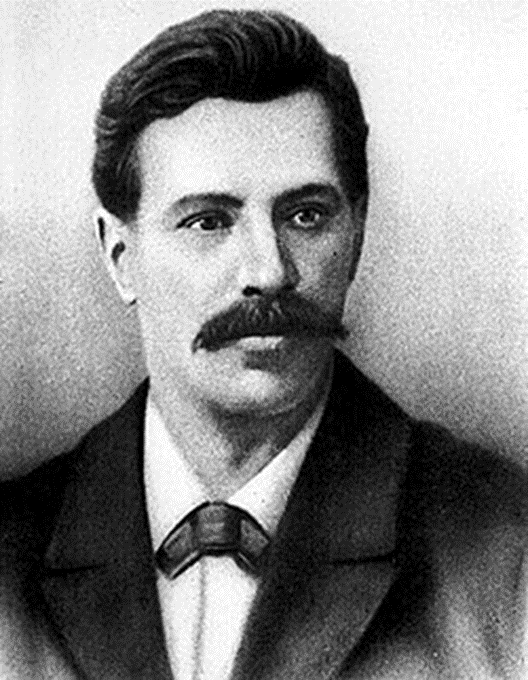
A Short Biography
Compiled by
C. BOBROVSKAYA
1932
This Pamphlet is prepared under the supervision of the Society of Old Bolsheviks, Moscow.
INTRODUCTION.
“When its leading representatives (of the working class. –C.B.) grasp the idea of scientific socialism, the idea of the historical role of the working class; when these ideas become widely circulated, and working class organisations are established, which can transform the present scattered economic battles of the workers into a conscious class struggle, then the Russian workers, assuming the leadership of the democratic elements, will overthrow absolutism and lead the Russian proletariat (together with the world proletariat) along the straight road of open political struggle to the victorious Communist revolution.” 2
This is how Lenin clearly and distinctly defined the task in 1894, twenty-three years before it was actually accomplished, in October, 1917, after great sacrifices and magnificent struggles by the Russian proletariat, under the leadership of Lenin.
After the October Revolution, Lenin repeatedly emphasized that the brilliant victory had been achieved only because for decades the Bolsheviks had been successfully linking up revolutionary theory with revolutionary practice; because they were able not only to teach the masses but also to learn from them; because they were able organizationally to consolidate their ideological influences on the masses.
Babushkin, the pupil, companion-in-arms, and personal friend of Lenin, and the first Bolshevik worker-correspondent, was a model of the Bolshevik organizer of the masses.
When Lenin learned that Babushkin had fallen a victim to the tsarist executioners, he wrote :
“The people have their heroes—these are people like Babushkin : the men and women who have dedicated themselves to the struggle for the emancipation of the working class, not for just a year or two but for an entire decade before the revolution; the men and women who have not wasted their energies on useless, individual terrorist activity, but have worked persistently and steadfastly among the proletarian masses, developing their class consciousness, their organisations, and their revolutionary initiative. They are the men and women who led the armed mass struggle against the tsarist autocracy when the crisis came, when the revolution broke out; when millions upon millions began to stir. Whatever was won from the tsarist autocracy was won exclusively through the mass struggle, led by people like Babushkin.
“ Without such men and women, the Russian people would have forever remained a nation of slaves, a nation of serfs. With such people to lead them, the Russian people will win for themselves complete emancipation from every kind of exploitation.”
The story of the life and work of Babushkin is briefly outlined in these pages. This story has been compiled from the following sources: an unfinished autobiography which Babushkin wrote at Lenin’s request and which is now kept at the Marx-Engels-Lenin Institute in Moscow, Lenin’s articles and correspondence with Babushkin, and the memoirs of Lenin’s widow, Comrade Krupskaya and of other Bolsheviks.
CHILDHOOD.
Ivan Vasilyevich Babushkin was born in January, 1873, of a poor peasant family in the Vologda province. The land holding of his parents was so small that his father, Vasily Babushkin, had to work at the salt works, where working conditions were terrible, in order to feed the family.
When Babushkin was five years old, his father died. His mother, Ekaterina Babushkin, had such a difficult time with her three children, of whom Vanya (Ivan) was the eldest, that she was compelled to send the youngster out to beg.
Having lost all hope of freeing herself from the grip of starvation and poverty in her native village, Ekaterina Babushkin went to St. Petersburg with her two younger children in search of work. Vanya, then seven years old, was left in the care of relatives who cruelly abused and exploited him. Young Babushkin lived with them for three years until his mother took him to St. Petersburg where she got him a job in a dairy.
He had to work in the dairy even harder than he had had to work for his relatives in the village. He had to carry heavy loads on his head, which caused the blood to rush to his eyes and they became inflamed. In addition to this he was cruelly treated and beaten by his employer. The work was so hard that he was really glad when he was sent to a hospital to have his eyes treated. In his autobiography, Babushkin says that he was glad to be in hospital because “no one scolded me and I could lie all day long in my cot with my eyes closed, and no one interfered with me.”
After this hard bringing-up, Babushkin was apprenticed to the Kronstadt torpedo works at 24 kopeks a day. On this princely wage he managed to eke out a livelihood until he completed his apprenticeship at eighteen.
IN THE FACTORY.
The main struggle of the St. Petersburg factory workers in the middle of the ’nineties was against the length of the working day. This is shown by the demands raised by the workers themselves at that time, enumerated in their strike leaflets, as follows :
“1. We want the working day to be from 7 a.m. to 7 p.m. instead of from 6 a.m. to 8 p.m. as at present
“2. We want dinner time to last an hour and a half so that the working day will be ten and a half hours instead of thirteen
“3. We want all work to stop on Saturday at 2 p.m. in all factories.”
From these demands it is evident that the sorest spot in the workers’ life was the excessively long hours they had to work. At that time the workers’ ideal was a twelve-hour day, for they worked from 6 a.m. to 8 p.m., fourteen hours a day. Babushkin describes the factory life in his autobiography as follows:
“During my first year in the factory I did not live ; I only worked. It was piece-work, and we worked day and night. Occasionally I would remain at the factory for days without going home, which was only twenty minutes’ walk from the factory. I remember that once, during a rush, we had to work for sixty hours on end, stopping only to snatch a bite. At such times, dazed from overwork, I would fall asleep on the way home from the factory, bump against a lamp post and wake up, but again fall asleep, and dream that I was rowing on the Neva and the bow of the boat had hit the shore.
“Working so hard, we saw nothing of real life, and our minds were always a blank. All our desires were focused on one thing, the expectation of a holiday. And when the holiday would arrive, we would sleep for half the day, and again there was nothing to see, nothing to hear, and nothing to learn. On the morrow, work again, nothing but deadening, exhausting work, no life, no rest. And with all that work there was no one who would say a word to you, either of praise or blame; no one would suggest a rest. And for whom did we perform this wearisome toil? Only, the capitalists’ for profit and our own stupefaction. Our only salvation was the fact that we did not quite understand the situation and did not realize the horror of this terrific oppression.
“This was our joyless life, and this was the life of the majority of the people. Here I end the description of my life up to the time of my conversion from a mere cipher—a man without any convictions—into a socialist human being.”
The deplorable conditions of work in the Russian factories had aroused the workers to spontaneous strikes even prior to the time described by Babushkin. Later on, individuals and even whole groups of such “socialist human beings” rose from the ranks of the factory workers and became initiators, organizers and leaders in the class struggles which followed. Young Ivan Babushkin got in touch with a group of class-conscious workers in his factory and found that they were connected with the revolutionary intelligentsia.
AWAKENING IN THE FACTORY.
Babushkin describes his initiation into the revolutionary movement very picturesquely : we still had about ten to before the whistle, and some looking round, I heard some “ One Saturday when fifteen minutes to go of us were cautiously one say, “ Let’s finish our slaving; there is no end to this job.” It was a machinist. called Kostya, a young man like myself, who spoke. I nodded my head and said : ‘That’s true; only fools love work’.
“‘Tomorrow is Sunday. Is your gang working?’ began Kostya diplomatically, apparently having decided beforehand that I was a suitable subject. ‘What do you do during your spare time at home?’
Why, nothing in particular. We are planning to arrange a dance soon,’ I said haltingly, hoping to induce him to join me in a spree.
“‘Have you any books?’
“I was embarrassed. I had not read a book for a long time, although I possessed a dozen of them. I did not understand them, and they therefore remained untouched on the shelf, the decoration of a young man’s room.”
On his first free Sunday, Babushkin visited his new acquaintance Kostya, in whose room he found two young workers reading a leaflet. This leaflet was passed on to Babushkin to read, and he says in his autobiography :
“From the very first words, I understood that this was something that I had never seen nor heard of before. The very first words I read aroused a peculiar feeling within me. Involuntarily my thoughts began to run so fast that I read with difficulty. The leaflet spoke against the priests, the Tsar and the government; it was couched in strong language, and as I read, I became more and more convinced that what the leaflet said was true, and that one had to do what the leaflet advised. I could already imagine myself being executed for crimes committed against the powers that be, and I felt that all life was going to rack and ruin. At the same time, I realized with a shock that there is no hereafter and there never was one, that it was all invented to fool the common people.
“I believed everything that was said in the leaflet without any reservation; it had a profound effect on me. I finished reading with difficulty and felt weighed down by the thoughts that the leaflet had aroused. The meaning of the leaflet sank deeply into my brain, and from then on, I became an anti-government element.
“I silently returned the leaflet to Kostya. I understood immediately the purpose of his invitation and decided that for this cause it was worth sacrificing everything, including one’s life.”
Babushkin’s decision —to become an “anti-government element” —changed the course of his entire life. It was not accidental, although it was arrived at after reading a single leaflet. It only showed how far the ground had already been prepared, to what degree the growth of the capitalism in Russia was being accompanied by the growth of its grave-digger, the working-class, which was beginning to create its own leaders.
After the incident with the leaflet Babushkin began to educate himself; he began to read much and to attend the Sunday school for workers, about which he later wrote in his autobiography as follows:
“Autumn was approaching. We were waiting impatiently for the opening of the Sunday school about which we had already heard a great deal. Much had been said in praise of this school : that one could learn to understand people there, and especially that one could gain knowledge there, that all the teachers gave their services free of charge because they wanted to bring knowledge to the people, and that they were ready to suffer oppression and persecution at the hands of the government for the sake of the people.”
These Sunday schools existed legally and were skillfully used by the Marxist revolutionary intelligentsia, who went there as teachers, as a legal cover for their revolutionary propaganda among the factory workers. Instead of the official course of geography, these teachers taught Marxian political economy; instead of the official history which dealt with the heroic exploits of the Tsars, they taught the history of the revolutionary movement, and in a disguised form told how the Russian Tsars played the part of international gendarmes, the suppressors of all emancipation movements, not only in Russia, but in the rest of Europe as well.
Babushkin entered such a school in St. Petersburg where N. K. Krupskaya, and her friend Lydia Knipovich, who later also became a famous Bolshevik, were working. Krupskaya states in her reminiscences that Babushkin did not excel as a conspirator. During one of the lessons in Russian grammar, when he had to give some examples, he wrote on the blackboard : “ There will soon be a strike in our factory.” After the lesson Lydia Knipovich called him aside, chided him for his carelessness, and pointed out to him that one could be a revolutionary without shouting about it. Babushkin blushed and was very much embarrassed, but from that moment very friendly relationships were established between teacher and pupil. Thus from the very beginning the school taught revolutionary endurance. The work of the Sunday school is an illustration of the manner in which even in the restricted circumstances of that time the Bolsheviks were able to take advantage of legal possibilities for illegal revolutionary work.
BABUSHKIN MEETS LENIN.
While studying at the Sunday school, Babushkin began to associate with the St. Petersburg revolutionary Marxist intelligentsia. From the autumn of 1893, this group was led by young Lenin, who came there especially to carry on revolutionary work. Babushkin was fortunate enough to join a circle led by Lenin himself.
The reader will forgive us if we quote at length the part of Babushkin’s autobiography where he describes the work of the study circle and of Lenin as a circle leader.
“A new acquaintance of mine, a worker connected with the intelligentsia, organized a circle. It met in my room, which was most convenient because there were no outsiders there. The circle consisted of six people, the lecturer being the seventh. We began our studies with the study of Marxian political economy. The lecturer presented his subject without the use of a text-book. He encouraged us to raise objections to the points he raised and provoked disputes among the students, encouraging us to defend our points of view against one another. Thus, our studies were always interesting and lively and at the same time effective in training us as speakers. “
“We found this method of study the best way of elucidating problems. We were always very much satisfied with the lectures and deeply impressed by the knowledge displayed by our lecturer. The standing joke among us was that he was losing his hair because he had too much brains.
“These lectures also trained us for independent research work. We used to receive lists of questions from the lecturer, which demanded the close study and observation of factory life.
Often during work, we used to go into various departments of the factory on various pretexts in order to collect the necessary information through direct observation and whenever possible through conversation with the workers. My tool box was always full of notes. During my lunch hour I used to re-write these notes, which were about the number of days we worked in our factory and about our earnings. The main obstacle to gathering such information was the lack of leisure time, yet we made some progress.
At that time a proper idea of the working conditions in the factories could be obtained only from the materials gathered illegally “in the tool box,” and there was always the danger of falling into the clutches of the gendarmes.
The collection of material about the life of the workers, to be used later in oral and written propaganda in approaching the working masses on the basis of their concrete needs, is the typical Bolshevik method of work which, as we see, was often applied when “firm organisations transforming the present scattered economic struggles into a conscious class struggle” were only just coming into being.
The method of instruction which Lenin used in the Semyannikov circle was no less characteristic —“ he encouraged us to raise objections to the points he raised and also provoked disputes among the students, encouraging us to defend our points of view against one another” . . ., thus making the studies “always interesting and lively, and effective in training us as speakers.”
Even at that time Lenin, more than anyone else, realized the significance of the problem of creating a staff of active workers. He realized what part “the leading representatives of the working class who mastered the ideas of scientific socialism” would play in the further development of the revolutionary struggle.
That is why Lenin, occupied though he was with the study of great theoretical problems even at that time, spent much time in personal supervision of the propagandist circles of which, as we know, he conducted several at that time. The members of these circles proved to be worthy pupils of their teacher.
FROM PUPIL TO TEACHER.
Babushkin particularly proved this by his brief but rich life as a proletarian revolutionary. He also proved it by his supreme courage when the time came to give his own life for the revolution.
While diligently training himself, studying at the Sunday school and in Lenin’s circle, Babushkin gradually began to occupy himself with practical work. He began to teach others and became an agitator himself.
In the winter of 1894, a spontaneous strike broke out in the Semyannikov factory, during which the factory office was demolished, the factory officials were beaten up, and the factory was set on fire. About the same time another strike broke out in the St. Petersburg port. These events decided the issue in the controversies which were then taking place in Social-Democratic circles. The disputes were about the methods of revolutionary work, that is, whether revolutionary activity should consist only in spreading propaganda among separate circles, or whether the time had already arrived for wide agitation among the workers by spreading literature among them. After the events at the Semyannikov factory and in the port of St. Petersburg, it became obvious that the moment for transferring from circle-leading to mass work had arrived. As the Russian press was completely mulled, the illegal press assumed extreme importance as a means of influencing the working masses through the spreading of leaflets at factories. Babushkin took part in the drawing up of the first leaflet of that type. In his autobiography, when speaking about the method of spreading this leaflet at the Semyannikov factory, he says:
“The occasion was most appropriate (that is, the riot in the factory and its suppression.—C. B.), and therefore it was desirable to try agitation in the factory proper. We composed a long leaflet which was hectographed, folded and made ready for distribution. But the question arose as to how to distribute the leaflets.
“ I was appointed to supervise this affair, but I did not even know how to set about it. To distribute the leaflets by placing them in the tool boxes was not expedient because it would be observed. I decided the best place would be the lavatories. I do not remember whether it was on a Saturday or Monday, when I took the leaflets for distribution; I put some in the lavatories, others I left wherever I could, throwing them into shops through broken windows, open doors, etc. At the other end of the factory the same thing was done : some leaflets were left in the tool boxes, others at the machines where the workers were sitting, and still others dropped wherever possible. In one shop the leaflets happened to fall into the hands of the foreman, who accused one of the oldest workers of distributing them. I was sorry for the old man, but could not interfere because that might have hindered the distribution of leaflets in the future. I decided to talk to the old man about it afterwards. The first distribution seemed to be successful, and later on leaflets were distributed in the workshops of the St. Petersburg port in the same manner. There they had an even greater effect than in the Semyannikov factory.”
Due to his propaganda work in the circles—always maintaining close contact with the masses, organizing them, setting up a circulating library, composing and distributing leaflets in plants and factories, and at the same time improving his own education —Babushkin gradually became one of the most outstanding and active members of the St. Petersburg League of Struggle for the Emancipation of the Working Class, of which Lenin was the leader.
When Lenin and his group were arrested on December 9, 1895, Babushkin temporarily evaded arrest. Regarding the impression these arrests made on him, he writes:
“The arrests were expected, but not so soon and not on such a scale. Naturally, this made a deep impression on me, but not so deep as it would have made had it happened earlier. I had already become accustomed to arrests and got over them quite easily.”
Writing of himself as an active revolutionary at that time, he says:
“A year ago, my whole idea was to grasp high sounding words, and to learn from the intelligentsia and from the teachers in school. At meetings I was shy and retiring. But now I had to carry on independent work and decide all kinds of questions myself : questions which arose in the educational circles, the factories, and at school. Often, I was aware that I was not altogether competent; still, I spoke, explained, advised, only because the better leaders had been deported. And since I was called upon to be a leader, I could not shirk my duty.”
This duty of being a “ leader” inspired Babushkin to write a splendid leaflet entitled What Is a Socialist and a Political Offender?
Three weeks after the arrest of Lenin and his group, Babushkin was given a batch of leaflets for distribution, explaining the significance of the arrest. He felt that he was performing this task for the last time because he himself was threatened with arrest. Detectives were already on his trail. After delivering the leaflets to the workers in certain factories, he took some of them to his comrades in the Obukhov Works, and after urging them to continue the work, he left them, with a strong premonition that he would be arrested that very night. And that is what actually happened. Gendarmes raided his lodgings during the night and made a thorough search, and although they found absolutely nothing, they made him dress and go with them.
“Early in the morning,” he writes, “just when the street lamps were being put out in St. Petersburg, I was taken to the jail. From the very first this immense building inspired me with hatred, but I was to become more closely acquainted with it, in adjusting myself to its rules and regulations, and in going through the many disturbances which took place during the thirteen months I was detained there.
“During all that time, I was unable to exchange a word with a single one of the comrades who were imprisoned along with me, and who, like me, were forced for long months to maintain silence, the silence of the grave.”
FURTHER ADVANCE.
During the second half of the ’nineties there was a temporary wave of industrial prosperity in Russia, and simultaneously with this prosperity there was a great growth of the movement, which resulted in the famous St. Petersburg strikes in the summer of 1896. The striking workers in the tsarist capital seriously frightened the government, and as a result, the first Russian labor law was passed, limiting the working day in factories to 11 1/2 hours.
However, this concession, wrung from the government under the pressure of the masses, did not prevent the tsarist gendarmes settling accounts with the most active participants in this struggle. Hundreds of the best workers were imprisoned or exiled to Siberia, and thousands were deported from the capital.
This “wise” policy of the tsarist rulers proved to be a double-edged sword, for the deported workers, carriers of the revolutionary bacillus, scattered the revolutionary infection throughout the country.
The South of Russia at that time was most susceptible to revolutionary infection. The large metallurgical centre of Ekaterinoslav (now Dnipropetrovsk) was a breeding ground for revolutionary ideas and naturally attracted the deported St. Petersburg strikers, who saw in it a fertile field for work. For that reason, Babushkin made for Ekaterinoslav when the sentence of three-year deportation was passed on him.
Solitary confinement for over a year did not break Babushkin’s spirit nor paralyze his will to fight, even though he was very young at the time. On the contrary, it steeled him for further revolutionary work. On his arrival at Ekaterinoslav be resumed his revolutionary activity and became completely absorbed in it. Revolutionary work now became his profession. He looked for a job in a factory in order to have contact with the workers. It was hard for him to get a job, and, when he finally did get one, he found that during his imprisonment his hands had become very tender and “ genteel,” and they were blistered from the work. The thought that he had become lily fingered during his imprisonment depressed him very much. But he soon got over it.
Knowing that many of the comrades deported from St. Petersburg must also have found their way to Ekaterinoslav, he searched for them. In his autobiography he relates how he made his first contacts :
“One morning, during the second month of my stay in Ekaterinoslav, my landlord came home from the night shift accompanied by another worker from the factory. The newcomer introduced himself as a comrade, and getting me out of my bed, which consisted of a thin blanket spread on the floor, he dragged me over to his house. There I met two other comrades who had landed there under the same circumstances as I.
“One of my new acquaintances was a pattern-maker; the other was a young factory lad of about twenty. The latter (we shall call him Matukha for short) particularly pleased me. A simple fellow, he was a typical representative of the masses; he knew nothing at all except the very elementary things he had learned in the village school. At first, he read with difficulty the leaflets which we distributed at the factories, but later he took an active part in distributing leaflets and in agitating for a strike. When he was arrested his only concern was about the other arrested comrades and the harm it might do to the movement. Matukha was all aflame with enthusiasm over the St. Petersburg strike movement.”
In a few months Babushkin succeeded in establishing firm contact with many deported St. Petersburg strikers, as well as with local revolutionary workers who by that time—1897 and early 1898—already had their own organisation, the Ekaterinoslav League of Struggle for the Emancipation of the Working Class. This organisation was based on groups outside the factories; it had not yet succeeded in penetrating the working masses.
Babushkin directed the work of the organisation into new channels. He was able to put it on a basis of wide mass agitation and propaganda. For instance, early in 1898, the Ekaterinoslav League of Struggle, under the leadership of Babushkin, prepared and distributed eight leaflets, one for each of the eight largest factories in the town, based on definite information about the conditions of the workers in each factory. Besides this, each leaflet linked up the conditions of the workers in each factory with the political exposure of tsarism; it showed that the workers had no rights, pointed the way to liberty, and called upon the workers to take up the organized revolutionary struggle.
How these leaflets were distributed and what impression they made on the workers Babushkin tells us in his autobiography:
“Late at night I went to one of the factories with Matukha. We came to a two-story building, climbed a fence and landed near the building. I lifted Matukha to enable him to open a window, and he threw a batch of leaflets into the shop. In this manner we spread leaflets in three departments. In the morning when the workers came to work, they naturally picked up the leaflets, and in a quarter of an hour everyone was reading them.
“In another factory we had much more difficulty in distributing the leaflets, because it worked twenty-four hours. But Matukha got a job there, and, taking a batch of leaflets with him, he calmly worked through the day and at 7 p.m. when everybody went home, he, too, left the shop, but remained inside the factory gates. He hid himself in a hole where they were digging an artesian well and remained there until midnight.
“When all the machines were stopped for midnight supper, he quietly came out of his hiding-place with his leaflets, and waited for the lights to go out. This was the moment for which he had waited five hours. As soon as the electricity was turned off, he ran into the shop, threw the leaflets about, ran out and jumped over the fence. Five minutes later, when the lights went on, the workers found the leaflets and began reading them. They created a profound impression. All the workers knew about the leaflets, and so did the factory administration, the gendarmerie and the city police, but none of them knew who distributed them. The workers in all the factories were encouraged by this incident; the administration, on the other hand, was forced to loosen its grip.”
All the Ekaterinoslav factories were stirred by the distribution of these leaflets. The activity of the organisation greatly increased, and Babushkin, the guiding spirit of these activities, was naturally overwhelmed with work. The right to hold meetings was completely denied the workers, and agitation by hectographed leaflets became more and more unsatisfactory. There was an urgent need for properly printed leaflets and even for a workers’ newspaper. For this it was necessary to equip a secret printing shop, and Babushkin enthusiastically took upon himself this new extremely difficult task. After many tribulations and persistent search, Babushkin finally succeeded in getting some type for his future printing shop. With much difficulty he also succeeded in converting an apartment into a printing shop. But everything was held up because of the lack of a printing press. The first of May was approaching, and it was necessary to issue a newspaper, or at least a May Day leaflet. Concerning this Babushkin writes:
“As quickly as possible I made a frame for the type in the factory. The foreman often noticed that I was working on something for myself, but exactly what I was doing he could not guess. Because of the tense situation he did not want to make trouble and, said nothing. After I finished the frame, the problem was how to get it out of the factory. I got one of the other workers to take it out for me, which he did, not knowing what it was for. After this it became necessary to make the ink rollers. The composition was made out of ordinary first-class carpenter’s glue and treacle. We had a great deal of trouble with it because it refused to congeal. I went to my comrades and asked them to assist me in making a mold at all costs, even if it were necessary to fight with the factory administration for it. One of the comrades remained at work one whole night, and with no foreman to watch him, the work was begun, and within two hours a well-shaped cylinder was ready to be taken out of the factory.
“I bought three reams of paper and a tin-plate for ink. I went to the apartment, where we set the type for the May Day leaflet. Then we began the printing which consisted in rolling a wooden roller with a linen towel tightly wound around it, over the frame which contained the type. Since the roller was very light, we had to press heavily on it with the whole weight of the body, which was difficult when we tried to work quickly. We worked in this way : one put on the ink and pressed the roller, the other put on and took off the paper, the third spread out the wet and gathered up the dry sheets, the fourth rested or folded the sheets.”
Thus was the “conveyor” system of illegal printing introduced under the tsarist regime. It required great patience to spend day and night at such work, but in the end Babushkin succeeded in putting out 3,000 May Day leaflets.
Babushkin worked in Ekaterinoslav under the Party name of “Tramwayny” up to the beginning of 1900, when the secret police began to shadow him persistently. To avoid arrest, he quietly disappeared from Ekaterinoslav.
“The train was speeding along the Nikolayev railway,” he writes, “ approaching St. Petersburg. Soon I was to see familiar streets and well-known faces. A real passport, belonging to a person in good standing, was in my side pocket, and with it I could safely appear anywhere.”
The three years of intense revolutionary work in Ekaterinoslav transformed the 27-year-old Babushkin into a mature, hardened fighter, capable of doing responsible, leading Party work. At that time Lenin was in Pskov negotiating the publication of the newspaper Iskra. Babushkin participated in these negotiations. From there Lenin sent him to work at the large industrial centers, Orekhovo-Zuyevo. Babushkin established contacts with the comrades working there, and in turn connected those comrades with others abroad, where Lenin went after the expiration of his exile in Siberia. There Lenin soon managed to establish the Russian Party organ Iskra, and organized a central Party organisation of the same name. Babushkin was the first worker-correspondent for the newspaper and one of the most active members of the Central Organisation.
A WORKER-CORRESPONDENT FOR ISKRA.
Here are some samples of Babushkin’s correspondence to Iskra from Orekhovo-Zuyevo, Ivanovo-Voznesensk, Bogorodsk and other textile centers:
Iskra, No. 4, May, 1901 : “Orekhovo-Zuyevo. Before describing the hospital rules and regulations at Morosov’s factory (Morosov was a large textile manufacturer.-—C.B.), it is necessary to say a few words on the local situation. We Orekhovo-Zuyevo workers would like to inform our own fellow-workers, as well as the workers of other cities and other industries, about the awful conditions in our factory, through the columns of the workers’ newspaper, Iskra Despite the efforts of notorious priests who work hand in hand with the capitalists and the government to keep us in ignorance by their cunning sophistries, the workers realize their miserable enslaved conditions.
“The population of Orekhovo-Zuyevo is 40,000, living in an area of nine square versts. Due to this congestion, the labor movement is very sluggish and retarded, chiefly as a result of mental starvation. We lack the literature that one is able to obtain in the capitals and large cities, and since workers from those centers do not come here, we do not know where or how the cause is developing.”
Following this there is a description of the provoking rules and regulations at Morosov’s hospital.
In issue No. 6 of Iskra, Babushkin describes the dreadful conditions of the workers in the factories of Ivanovo-Voznesensk. He dwells in detail on the strike that was then going on at the Kalashnik iron works and reports the following fact, which characterizes the proletarian solidarity of that period :
“Ten workers were imported from Moscow. They were not told that they were being employed as strike breakers. They were promised very good wages: from 78 to 80 or more rubles per month. But when the Moscow workers came to Ivanovo Voznesensk and learned what part they were to play in the strike, they declared to the Ivanovo-Voznesensk workers that they had been deceived and that, had they known about the strike, they would not have come. From that time complete solidarity was established between the workers of the two cities. Soon the Moscow workers went to the factory inspector to complain about the conditions in the factory. The employers, fearing complications, discharged them, the Kalashnik foundry workers made a collection for their fare, and the Moscow workers returned home.”
From Shum (Ivanovo-Voznesensk district) Babushkin reports
“ Recently night raids and arrests took place here, and the gendarmes have collected a batch of cases. They are arresting people for being in possession of books, even such as are not banned. At the examination the gendarme asks: ‘What is this for?’ ‘I bought it to read,’ replies the worker. ‘And why did you buy this and not the Bible? ‘ ‘And why do you read instead of sleeping? ’ This gendarme and the manufacturer Pavlov are very thick friends and very often get so dead drunk together that they resemble dirty swine more than human beings. Pavlov orders girls for his use as lightly as if he were ordering fried chicken. These representatives of the police and capital strive to keep the masses in darkness. A worker doesn’t dare to walk the streets with a book under his arm for fear the police might take it away and question him about it. This often happens near the reading rooms.”
Babushkin’s correspondence to Iskra is not merely an expression of his hatred of the tsarist regime, the capitalists, the priests and the gendarmes. His hatred is always fortified by the violence and oppression perpetrated against the workers in the factories and in their homes by these forces of the ruling class. Reading this correspondence, one gets the impression that the worker-correspondent, Babushkin, was in the very thick of life, that he suffered because of its restriction, that he did not describe it merely as an onlooker, but as an active participant who not only wrote but fought energetically against this consuming evil.
Thirty years ago, Babushkin quite clearly understood the task of a worker-correspondent. Lenin wrote about Babushkin’s correspondence and his organisation of worker-correspondents as follows : “As long as Ivan Vasilyevich (Babushkin) remains at liberty, the Iskra will not lack real workers’ correspondence. Almost all the correspondence from Shum, Ivanovo-Voznesensk, Orekhovo-Zuyevo and other parts of Central Russia that was published in the first thirty numbers of the Iskra passed through the hands of Ivan Vasilyevich, who tried to establish the closest contact between Iskra and the workers. Ivan Vasilyevich was the most ardent correspondent of Iskra and its warmest adherent.”
To the same Orekhovo-Zuyevo period belongs the very popular illegal pamphlet In Defense of Ivanovo-Voznesensk Workers, written by Babushkin. How this came to be written we learn from the memoirs of N. K. Krupskaya and from Lenin’s correspondence with the Russian Party organisations during the Iskra period. In Ivanovo-Voznesensk there was a factory inspector named Dodonovo, who, “grieving” for the workers, wrote some liberal trash about their lives. His article was published in the journal of the People’s Party, Russkoye Bogatstvo (Russian Wealth). In this article Dodonovo, “commiserating” with the Ivanovo-Voznesensk workers, pictured them as hopeless drunkards and fools who ought to be enlightened through the reading of liberal books.
When Lenin read this article, he was very much perturbed and he asked Babushkin to write a refutation of this liberal inspector. Babushkin’s reply to Dodonovo’s article, written under the pseudonym of “A Worker for Workers,” was replete with sarcasm :
“Mr. Dodonovo’s penetrating insight is truly remarkable. He is not like the hero of the story about the man who visited the Zoo and saw numerous insects, but failed to see the elephant. Oh, no! Mr. Dodonovo, arriving at the factories of Ivanovo-Voznesensk, immediately noticed a deep abyss, and what an abyss! All the factories were situated in it. Is not Mr. Dodonovo observant? And looking around, a few more things caught his attention, and he began to turn like the arms of a windmill, round and round and up and down, up and down.
“In going around he noticed that ‘drunkenness’ is worked out to a system, and turning again he saw that the workers sleep as closely packed as sardines, one’s head at the other’s feet; further he observed that the workers (all of them) have not the least desire to read nor any aspiration to study, that vodka is consumed in great quantities, and he saw a detective trying to unravel a brawl in which a torn coat was the only circumstantial evidence. He further observes drunken men, singing and dancing in the streets, loafing crowds and empty theatres, and not a book anywhere. Quite right, Mr. Dodonovo, we do have drinking parties occasionally, and not only in Ivanovo-Voznesensk but also in Moscow, St. Petersburg and South Russia. Every cultured worker is carrying on a persistent struggle against this evil. But we cannot agree that this is “one of the worst evils of factory life.
”When a weaver who has just got a job invites ten or fifteen people and buys a gallon of vodka, to celebrate the occasion they are not having a drinking bout, they are innocently having a drink after work to congratulate their fellow worker on having fortunately found a job. And this does not happen every day. Besides, may I, with your permission, ask this question : Why, when his Royal Highness takes a drink for his health and then a toast for the King and another for the Count, time without end, until he gets blind drunk, why, Mr. Donov (do you not say that this is drinking ‘worked out to a system’) and why is not this ‘ the worst of evils’ in the life of the highly educated classes?”
Babushkin’s activity in the textile region was not limited to his literary work : the Iskra correspondence and the above-mentioned pamphlet. His activity as an agitator and organizer of the textile workers were very varied, and in all this work Babushkin invariably followed the instructions of Lenin, with whom he constantly carried on a personal correspondence.
ARREST, IMPRISONMENT, FLIGHT.
The intense revolutionary work Babushkin carried on in the textile districts inevitably drew the attention of the authorities, and in December, 1901, the gendarmes raided the local organisation and, among others, arrested Babushkin, who was charged as the “unknown.”
For a long time, the gendarmes tried to learn Babushkin’s identity and finally they discovered that he was the man who had slipped through their hands in Ekaterinoslav. They kept him in the textile district for a little while and then sent him to the south, the scene of his previous “crimes.” There Babushkin languished in jail until June, 1902, when after a file had been smuggled in to him from outside, he broke out of jail and escaped.
IN LONDON WITH LENIN.
Not knowing a single word of any language except Russian, Babushkin managed to cross the frontier in September, 1902. He appeared unexpectedly at Lenin’s house in London, where the editorial office of the Iskra was located at that time. 3 In her memoirs, N. K. Krupskaya writes about Babushkin’s arrival in London as follows:
“At the beginning of September, 1902, Babushkin arrived, after having escaped from Ekaterinoslav prison. His escape from prison and get-away across the frontier was furthered by the assistance of some schoolboys. They dyed his hair, which, after a while, turned crimson and attracted general attention. In Germany he fell into the hands of the commissioners, and only just avoided being deported to America. We fixed him up in the commune, where he lived during the whole of the time of his stay in London. By this time Babushkin had made great strides in his political knowledge. He was now a steeled revolutionary with his own opinions. He had an extensive experience of all kinds of working-class organisations and, being himself a worker, had nothing to learn as to how to approach the workers. When he had first come to the Sunday school some years back, he was quite an inexperienced fellow. I remember one episode. At first, he was in Lydia Mikhailovna Knipovich group. They were learning Russian grammar and going over various examples. Babushkin wrote on the blackboard : ‘There will soon be a strike in our factory.’ After the lesson, Lydia called him aside and rebuked him : “ If you want to be a revolutionist you must not make yourself conspicuous as one, but be able to use self-restraint. . . .’ Babushkin blushed, but afterwards came to regard Lydia as his best friend and often consulted her of our activities.
“It was at that time that Plekhanov arrived in London. A joint meeting with Babushkin was arranged. Russian affairs were discussed. Babushkin had his own opinion, which he defended very firmly. He was so tenacious that he began to impress Plekhanov. Georgi Valentinovich certainly began to look at him more attentively. But Babushkin spoke of his future work in Russia only with Vladimir Ilyich, with whom he was particularly intimate. I remember yet another small but characteristic incident. Two or three days after Babushkin arrived, we were astonished, on entering the commune, to find how clean everything was. All the litter was cleared up, newspapers neatly arranged on the table, and the floor swept. It appeared that Babushkin had been putting things in order. ‘ The Russian intellectual is always dirty,’ said Babushkin. ‘ He needs a servant as he is himself incapable of tidying up.’” 4
About that time, the autumn of 1902, Lenin was very busy enrolling Party workers, professional revolutionaries, for the purpose of sending them throughout Russia as Iskra agents. As Lenin wrote later on, Iskra fought for the creation of an organisation of professional revolutionaries, and it fought particularly hard in 1901-1902. It finally overcomes the ‘economizing’ which prevailed at that time and established such an organisation in 1903.
THE ST. PETERSBURG AGENT OF THE ISKRA.
Babushkin was soon dispatched to Russia as one of the agents of Iskra. He was given a very responsible post in St. Petersburg, where the Party organisation was carrying out the revolutionary policy of Lenin very badly. The inner Party struggle between the revolutionary Social-Democrats, who later became the Bolsheviks, and the economist-revisionists, who later became the Mensheviks, was most intense.
Lenin characterized the St. Petersburg economist-revisionist as being “flabby and uncertain in theoretical questions, narrow minded, pleading the spontaneity of the masses as a justification for his own sluggishness, resembling a trade union secretary rather than a tribune of the people, unable to put forward a broad and bold plan that would inspire even opponents with respect, inexperienced and clumsy in his professional art, shocked at the very idea of fighting the political police. He is not a revolutionary but a wretched amateur.”
The revisionists in the St. Petersburg committee were represented by a person named Tokarev, who threw comrades with Iskra sympathies out of the committee, for which he was nicknamed “ Vishibalo” (chucker-out) and his followers “ Vishibalovtsi.” Very characteristic documentary evidence about Babushkin’s activity in St. Petersburg in the late autumn of 1902 and in the beginning of 1903 is contained in a letter from Lenin to Babushkin (his Party name was then Novitskaya), from which we take the following extract :
“ London, January, 1903. Very glad to hear about the energetic work of Novitskaya : again, we request you to continue in the same spirit, without the slightest hesitation. War on the ‘Vishibalovtsi’ and to the devil with all conciliators, ‘elusive ’ opinions and snivellers. It is better to catch a small fish than a big toad. Two or three energetic, devoted people are better than a dozen dawdlers. Write as often as possible, give us immediately all the contacts you have with workers (and their descriptions) so that in case of arrest we will not be left stranded.”
As the reader can see, “Novitskaya” did not remain idle in St. Petersburg. It is well known that Lenin was not one to waste compliments on his workers, and if he expressed pleasure at the energetic work “ Novitskaya” was doing, we can take it for granted that he was fighting strenuously for Lenin’s line in the St. Petersburg organisation, and that was not an easy matter.
Babushkin lived in St. Petersburg as an insurance agent, registered under a fairly good passport. In spite of that, however, the secret police soon got on his track, and his brief but fruitful activity in the St. Petersburg organisation was put to an end.
THIRD ARREST AND EXILE TO SIBERIA.
Towards the end of January, 1903, Babushkin was again arrested. This time he had to spend a year and a half in solitary confinement, and in 1904 he was exiled to the remote Yakutsk district of Siberia.
Despite the difficulties of the long solitary confinement and the hardships of distant Siberian exile, particularly the difficulty of maintaining proper contacts with the Party, Babushkin was not disheartened. He was not that kind of man. Besides, this was not the time to lose heart. In 1904, the stirring breath of the revolution of 1905 could be distinctly felt. Babushkin read a great deal, studied and trained himself, fully conscious that with the further development of the revolutionary events highly qualified workers would be needed, so he diligently equipped himself with theoretical knowledge.
However, after only one year of this strenuous theoretical training, the practical work of the revolution began to call even those tsarist captives who were exiled beyond the Arctic Circle.
THE STRUGGLE OF 1905 AND DEATH AT HIS POST.
In 1905, Siberia, like the rest of boundless Russia, began to stir. The year 1905 had aroused the broad masses to active political struggle. The exiled revolutionaries who were then in Siberia immediately took the lead in the movement. Naturally, a revolutionary like Babushkin would choose a fitting place in the fight as belonging to him by right. We find him at the head of the fighters in the nearest city to his place of exile, the large Siberian centre of Irkutsk.
Sometime later the Siberian Party centre sent him to work in Chita, which at that time was completely in the hands of the rebellious people. Here Babushkin displayed the maximum of revolutionary energy.
But at the end of December, 1905, the armed uprising in Moscow was crushed. The repressive measures of the tsarist government reached all the way to Siberia. During the night of January 1, 1906, the gendarmes of Irkutsk arrested the entire Party committee. In order to re-establish the organisation, help was required from Chita, which was still holding out. Chita sent Babushkin to the assistance of Irkutsk. He went there with five other comrades and a large quantity of arms.
At the Sludyanka station, on the Kruglo-Baikal railroad, Babushkin and his comrades were overtaken by the punitive expedition led by Baron Bellor-Zakomelsky, which was sent by the Tsar to suppress the revolt in Siberia.
The tsarist executioners shot young Babushkin and his comrades on the spot, at the edge of a freshly dug grave. Since Babushkin refused to give his name or to converse with his enemy, he went to his grave unknown.
Regarding this execution Lenin wrote:
“Babushkin fell a victim to the brutal henchmen of the Tsar, but dying, he knew that the cause for which he gave his life will not die, that thousands and millions of other hands will carry on the work, that other comrades will die for the same cause, that they will fight until they conquer.”
In this short sketch of the main periods of Babushkin’s life, so rich in revolutionary content, it was not possible to deal with his private life. It is known that Babushkin loved and had compassion for his hard-working mother, but he could do very little for her, and the imprisonment, exile and persecution he had to endure saddened her and still further clouded her weary, unhappy life.
Babushkin was married to a working woman, Praskovya Ribas, a revolutionary, who lived illegally, was persecuted, and imprisoned. There are documents in the archives of the Lenin Institute which show that Praskovya Ribas often found herself in Tver or some other city with a child on her hands, without money, without a passport and expecting arrest any moment. Her husband, Babushkin, in the meantime was either in prison or on his way to exile in Siberia. Years passed, but these loyal devoted people did not see or hear from each other. No one even knew that Babushkin had been murdered during that terrible period of reaction. It only became known in 1910, and Lenin in an obituary on Babushkin wrote:
“We live under such accursed conditions that it is possible for an important Party worker, the pride of the Party, a comrade who had irrevocably given his whole life to the workers’ cause to disappear and leave no trace. And his nearest and dearest, his wife and mother and his nearest comrades may not know for years what has happened to him : whether he is languishing in prison, whether he has perished in exile, or has died the death of a hero in battle with the enemy. The last was the fate of Ivan Vasilyevich. We learned about his death only recently.” 5
Five whole years passed before the news of Babushkin’s death reached his comrades. It is obvious that it is quite out of place to speak of the private personal life of a man like Babushkin. He who so energetically prepared the road to the great October had no personal life, for he devoted himself entirely, without reserve, to the proletarian revolution, the triumph of which, even if only on one-sixth of the globe, he was not destined to see.
5 Footnotes