The Comrades-in-Arms of Thälmann
Return to Cecilia Bobrovskaya
The Comrades-in-Arms of Thälmann 1
By
C. BOBROVSKAYA
1936
At the Seventh Congress of the Comintern, Comrade Dimitroff pointed to the extremely great importance of the problem of cadres for the international movement, and stressed the point that this problem is of especially great importance in fascist countries, where the active members of the Party are constantly in the firing line, where the hunt by the enemy after just these foremost comrades is particularly violent, and where they are hurled into prison, into concentration camps, and are cruelly tortured and killed.
The figures of these foremost comrades, of these unbending fighters for the proletarian revolution, cannot and must not be forgotten. We must make known the lives of these people who incessantly, day after day, are fighting for Communism, carrying on stubborn work in the deeply illegal conditions, in spite of all the obstacles in their way and of the snares of the enemy.
We must make known their wonderful staunchness while held prisoners by the enemy; we must make known their heroic behavior in prison, under examination, while being tortured, before the fascist court, under the axe of the executioner.
Among this gallery of heroes, friends and comrades-in-arms of Comrade Thälmann, whose splendid lives have been cut off by fascist bullets or by the axe of the fascist executioner, there stand out most clearly before our eyes, first and foremost, the shining figures of Comrades John Scheer and Fiete Schultz.
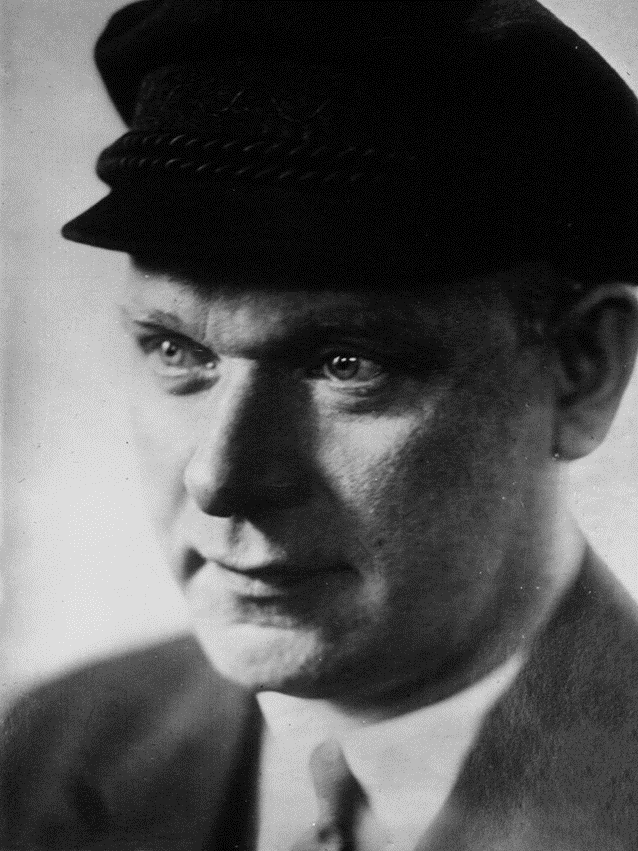
Comrade John Scheer, member of the Central Committee of the German Communist Party, and member of the Political Bureau, closest friend and comrade-in-arms of Comrade Thälmann, was born in a working-class family in 1894 in Alton, near Hamburg. In this working-class center, with its gloomy houses thickly populated with the poor, he spent his cheerless childhood. It was here that he learned the trade of fitter, and it was here that from his early years he joined the working-class movement, taking a most active part in the incessant revolutionary struggle which the glorious proletarians of Hamburg and its environs were waging.
The qualities possessed by Comrade Scheer which won the profound sympathy of the workers of Alton, and which made him a leader of the masses can be summed up as follows: a fiery, revolutionary temperament, talent as an agitator, and a broad political outlook, combined with proletarian modesty.
Scheer joined the ranks of the Communist Party of Germany together with Comrade Thälmann, and was one of the outstanding Party leaders in Hamburg, Hanover and the Ruhr. Comrade Scheer together with Comrade Thälmann devoted special attention to the proletarians of the coastal region, where they both worked for a number of years.
October 1923:
“Impelled by the poverty of the period of inflation, driven by the unprecedented need of the toiling masses, inspired with the spirit of Bolshevism, the best, most revolutionary section of the workers of Hamburg took up arms to fight against their capitalist oppressors.” (Ernst Thälmann.)
For two days the fighting continued on the streets of Hamburg. And if the uprising could not spread beyond the bounds of Hamburg, and was so easily suppressed, the blame lies not with the best and most revolutionary section of the proletarians of Hamburg, not upon Comrade Scheer, but with the cowardly opportunist group of Brandler, which at that time headed the Communist Party of Germany, and which capitulated before the class enemy, in spite of the fact that a revolutionary situation was present at that time.
After the Hamburg uprising, Comrade Scheer had temporarily to work illegally, which in fact did not, however, make him lag in his energetic activities, Comrade Scheer was one of the most active fighters for the ideological and organizational consolidation of the Communist Party of Germany. Every time conflicts arose inside the Party between its firm Bolshevik cadres and the elements which swung now to the Left and now to the Right, Comrade Scheer was unerringly in the ranks of those who fought determinedly to Bolshevize the Party.
During the years 1924 and 1925, Comrade Scheer carried on an active struggle against the remains of Brandlerism, and in 1927, at the Essen Party Conference, he fought against the counter-revolutionary Trotskyists of the Ruth Fischer type.
In 1929, at the Wedding Party Conference, where Comrade Scheer was elected to the Central Committee, he spoke of culminating the struggle against the group of conciliators, of the need to liquidate this anti-Party group, which, in its actions against the general line of the Party, resorted to its favorite method of discrediting the leaders of the Party, and tried to discredit Comrade Thälmann in the eyes of the masses.
It was precisely during these days that Comrade Scheer undertook a passionate defense of Comrade Thälmann.
Comrade John Scheer also played no small part in the struggle against the Neumann-Remmele group, and facilitated their removal from the Party leadership. This anti-Party group caused the Party no little harm precisely at the moment when the Party had to wage a desperate struggle to win the masses, the most backward of whom had already begun to fall victims to the hypnosis of fascist demagogy.
In the years 1930 and 1931, Comrade Scheer was the political leader of the Braunschweig Party organization. There he set a fine example of the practical application of the united working-class front tactics, by organizing and leading a political protest strike of the Braunschweig proletariat against an attack made by a fascist band upon a group of workers, which ended in the murder of a worker, a member of the Social Democratic Party.
In this first political strike, so impressive in its scope, all the workers of Braunschweig took part, irrespective of the parties to which they belonged. The strike was distinguished for its high political level, and it was led by Communists, and first and foremost by Comrade Scheer.
After the Braunschweig’ events, Comrade Scheer was arrested. And with what joy his release was welcomed in the autumn of 1932 by a meeting of workers, twenty thousand strong, in the Palace of Sport in Berlin! And it was with a similar display of enthusiasm, that, only a few days before the fascist coup d’etat, in January, 1933, he was greeted as the staunch comrade-in-arms of Thälmann together with the other members of the Political Bureau of the Central Committee of the Communist Party of Germany by a tremendous Communist demonstration held near the Karl Liebknecht House.
In connection with the advent to power of Hitler and the arrest of the leader of the Party, Comrade Thälmann, great responsibilities fell to the lot of Comrade Scheer: he had to take Comrade Thälmann’s place in the days when the entire Party—a legal, mass Party—had to be transferred without delay on to illegal conditions.
Comrade Scheer threw himself head and shoulders into the work in conditions of the most ferocious fascist dictatorship, in conditions of raging fascist terror.
Comrade Scheer did a tremendous amount of work to build up and strengthen the illegal Party apparatus, to find new, fearless cadres to take the places of those Communists who were arrested, and tortured in fascist dungeons, and to give them instruction and training.
Comrade Scheer fought mercilessly, in his speeches and in his articles, against the fascist demagogy which in the first day began to affect the consciousness of the backward masses in a menacing manner. By way of example, we give here only one excerpt from his article written during that period, an article which came to hand after his death, and which was published in No. 12 of The Communist International in the year 1934.
In this article, point by point, Comrade Scheer patiently smashed to bits the “ideology” of the fascists. Comrade Scheer quotes the following part of Hitler’s speech:
“ … ‘To order’ and ‘to obey’ acquire an absolutely different and compulsory sense, when people of different worth clash, or come into contact with one another. … In the most primitive sense of this word, it takes place at the time when man subjects animals to his power . . . without asking the consent of his assistants from the animal kingdom,”
This is how Comrade Scheer replies to this:
“Our nature philosopher reduces human society and the relations between men from the relations of man to domestic animals…
“… the Nazis borrow the basic concepts of their philosophy from the ideology of slavery. This is by no means accidental, for modern capitalist exploitation is striving, under the scourge of fascist dictatorship, to transform fifty million German workers, peasants and toilers into slaves devoid of all rights, into cannon fodder for an anti-Soviet war, for the sake of the profits of monopolist capital.”
Comrade Scheer was only able to carry on his work in the profoundly illegal conditions for nine months. In the autumn of 1933, the fascist bloodhounds got on his track. The comrades insisted upon his hiding for a time, but severe with himself as always, and knowing that the work would suffer even if he left it for a time, he delayed. Soon he was seized by the enemy. The enemy knew how important Comrade Scheer was for the Communist Party, and consequently literally threw themselves upon him in sadistic ecstasy.
From the very first days of his arrest there were no insults, no tortures which Comrade Scheer did not suffer at the hands of his jailers.
They flogged him until he lost consciousness, they made him run the gauntlet, they stood him up against a red-hot stove, and all this to make him speak; but his answer to the butchers was ever the silence of the grave.
By his stoicism in Hitler’s dungeons, by his staunchness, Comrade Scheer filled even some of his tormentors with respect.
When the Hitlerites understood that people like Comrade Scheer would never speak, that they could get nothing out of him either about the illegal work or about the strength of the Communist Party, they decided to get rid of him.
On the fatal night of February 2, 1934, Comrade Scheer, together with three other comrades, were taken out into the forest, a volley rang out and all four fell dead. The next day, the fascists announced: “Shot, while attempting to escape… .”
On March 18, 1934, on the day when the workers of all countries lower their banners in memory of the heroes of the Paris Commune, another of Comrade Thälmann’s comrades-in-arms, a glorious son of the working class, a worker from Hamburg, Fiete Schultz, listened, his head held high, to the death sentence pronounced against him by the fascist judges.
This is how Comrade Schultz was described by the State Prosecutor in his speech on the indictment:
“A man who takes the road of a Communist, who takes it without hesitating, a man full of energy, who unfailingly follows only his own Communist interests, a man whose tongue is more dangerous than the bullets of those who shot at his instigation—such a man must die. I demand his death, and may Communism, the downright expression of which is Fiete Schultz, perish with this accused.”
Undoubtedly Comrade Schultz deserved this magnificent testimonial from the mouth of the enemy, although he had nothing whatever to do with the accusation levelled against him of 16 crimes against the state, for the sum total of which he was given a three-fold death sentence and, in addition, 260 years’ imprisonment.
The reference was to conflicts between groups of workers and fascist bands who had attacked them, and had operated in all the workers’ districts long before Hitler came to power.
Fiete Schultz, like John Scheer, was also born in 1894 at Schiefbecke, a suburb of Hamburg, in a working-class family. He took an active part in the working-class movement in Hamburg, but at the beginning of the imperialist war was forced to leave his native town and become acquainted with all the joys of barracks drills in the army of Kaiser Wilhelm, so that he could be sent to the front and be seriously wounded in 1917.
On returning to his native town, after having somewhat recovered, Comrade Schultz under the leadership of Comrades Thälmann and Scheer, again took up the struggle, and, in 1923, during the days of the Hamburg barricades, he took up the rifle and took his stand with those of whom Comrade Thälmann said:
“The revolutionary fighters on the barricades saved the honor of the Communist Party of Germany with their bodies and their lives.”
The Hamburg uprising was suppressed. Comrade Schultz, together with other active comrades, escaped arrest, worked underground, and soon emigrated. He went to distant lands, to South America, where he starved, met with many homeless proletarians like himself, and together with others experienced the burden of the struggle against the exploiters, the weight of unemployment. Not a few severe lessons life gave him, but he always remained an optimist, and became strong for further battles.
He wandered about the world in this way for three years, and then found his way to the Soviet Union, which he had always wanted to see.
He spent five years there—from 1927 to 1932—in the homeland of the international proletariat.
While working in Soviet factories, it became possible for him to take a direct part in socialist construction.
During the years of his sojourn in the U.S.S.R., Comrade Schultz saw how industrial giants grew up on barren lands, how entire socialist towns were built. He also saw how the reconstruction of the Russian villages, many millions in number, took place according to the brilliant plan drawn up by Comrade Stalin. Comrade Schultz made full use of his opportunity to raise his theoretical knowledge, to equip himself with the theory of Marxism-Leninism.
All that he lived through, experienced, pondered over and read made of Fiete Schultz a proletarian revolutionary of whom it was said, in the address of the Brussels Party Conference of the Communist Party of Germany to Comrade Dimitroff:
“With the image of you in their hearts, never-to-be-forgotten heroes like Fiete Schultz went to the scaffold.”
On his return to Hamburg, not long before Hitler came to power, and living illegally, but always surrounded and protected by hundreds of thousands of true proletarians of Hamburg, Fiete Schultz fought desperately against the fascist danger which was approaching. With all the ardor of his revolutionary temperament, he stood up before the masses and exposed all the poison of the fascist demagogy. In particular, he carried on great work to explain to the masses and keep them informed of the achievements in the Land of Soviets.
“I was astounded on my arrival in Hamburg”, said Comrade Schultz in court, “at the degree to which knowledge, concerning the true state of affairs in the Soviet Union, and its tremendous achievements, is distorted here.”
When the judges thereupon asked him questions about work in the Soviet factories, and what class he belonged to there, Comrade Schultz pretended that he did not understand that it was a question of what class, category, of worker he belonged to and replied: “In the Soviet Union there are no classes.” This reply infuriated the prosecutor.
After seizing power, the Hitler gang hunted high and low for Comrade Fiete Schultz and in April, 1938, he fell into their hands; he was seized, moreover, for purposes of provocation, so that other arrested comrades, considering him to be dead, would throw all the blame on to him during the examination. It was rumored that soon after his arrest, Fiete Schultz hanged himself in his cell. However, there were very few who fell for this provocation although for many long months the comrades thought that Fiete Schultz had really committed suicide in prison.
The floggings, insults, and hard labor, which he endured in the fascist prison over a period of two years, did not break the fighting spirit of Comrade Schultz, but on the contrary, steeled him still more.
The days of the trial came at last.
Replying to the judges on the accusation leveled against him, Comrade Schultz said:
“I know what kind of a court I am facing. I am responsible only to my Party and the working class. I have nothing to say in my favor before a court which is the court of the government of the people’s enemies. I know that the Prosecutor wants to have my head, but he will have to hurry. Come what may, we shall be the victors.”
For twenty-three days the proceedings of the bloody fascist court dragged on, the Berlin fascist newspapers- keeping strict silence concerning it. For the obtaining of fragments of news about the heroic behavior of Comrade Schultz during these days, we have to thank the indignation of the Hamburg proletarians, which, despite the desperate fascist terror, made itself felt in different forms during the whole of the trial. By virtue of this fact, the fascist newspapers in Hamburg did not dare to ignore entirely what was going on in the court, and were compelled to give some information, on the basis of which we can build up a picture of the trial, although not a complete one.
The rage of Comrade Fiete Schultz’ class and Party comrades found expression in the fact that every morning the judges received leaflets containing protests, threats and curses, which the judges cynically referred to as “our usual breakfast”, and attached to the files on the case. Comrade Schultz most energetically protested against the State Counsel forced upon him, a fascist called Weischneider.
“I protest against the fact that I have not been allowed to put my own case in court”, said Comrade Schultz, deeply indignant at the behavior of the official lawyer, whose ‘‘speech in defense” he indignantly interrupted several times, especially when that individual mumbled about “mercy”.
Here is an excerpt from the speech of the “Counsel for the Defense’”’, as it appeared in the Hamburger Tagesblatt of March 15, 19385:
“Although the Counsel is far from possessing the political theories of the accused, it is his task … to defend the rights of the accused. … The defense admits that the examination in court has been conducted fundamentally and seriously. … The decisive question in this trial is whether the accused deserves to die. Not out of humanitarian feelings or liberal weakness, does he (Weischneider) ask that the death sentence not be passed, but because the state today is stronger than any Communist fanaticism.”
“After an exchange of words between the Prosecutor and the Defense”, the paper continues, ‘‘the accused emphasized in his last speech that any pleas for mercy are unworthy of a Communist. The president had to interrupt the accused several times, because he went beyond the bounds of a concluding speech, and entered into Communist arguments.”
During the whole of the 23 days’ trial, Comrade Fiete Schultz showed tremendous activity, colossal stoicism and thus there were times when he succeeded in speaking, but the reports of his speeches in the fascist newspapers unfailingly run as follows: “The accused again delivered a confused Communist speech for almost an hour”, or “the accused once more tried to use fantastic Communist arguments, etc.”
Fiete Schultz was firm to the last. A short time before the sentence was brought in against him, he said: “There will be one fighter less, but we shall be the victors all the same.”
And after the sentence was announced, he shouted out in court “Come all of you to the execution, and you will see how a Communist can die!”
The police hurled themselves upon Comrade Schultz. The fascists present in the court cried out: “Long live Hitler!” But among the shouting there was heard the single voice of a woman who cried out: “Long live Fiete Schultz!” and the police fell upon her as well.
On June 6, 1935, at dawn, Comrade Fiete Schultz had to lower his proud head, before the axe of the fascist executioners.
“We must understand once and for all that of all the valuable capital in the world, the most valuable, the most decisive capital is people, cadres.”
These words of Stalin, in the light of the tasks which confront all the Communist Parties in the lands of fascist dictatorship today, where the executioners are physically annihilating the revolutionary leaders of the proletariat, imply that it is necessary, side by side with the maximum attention devoted to our cadres, who are living and carrying on the struggle, to popularize, especially among the youth, the names of those who have already perished, who were tortured to death in fascist dungeons, and the glorious road taken by those who teach us how to live and act, teach us how to continue the work they began and bring it to its victorious conclusion.
The lives and struggle of such comrades as John Scheer and Fiete Schultz are most valuable weapons in our hands of training and hammering out new cadres, new fighters for Communism, fighters and victors, for Comrade Schultz was right when he said in court: “We shall be the victors!”
1 Footnotes